Introduction
Since relocating to Asia, we have taken any and every opportunity to hunt down the many exquisite desserts that the region has to offer. In China specifically, we are making it a mission to hunt down desserts outside of the main Beijing-Shanghai tourist route. So far, we have admired exceptional pastry craftmanship at two luxurious afternoon teas in Shenzhen, compared historical and modern Chinese desserts in Xiamen and Quanzhou, stumbled upon a most enchanting underwater high tea in Hainan, and watched the dance of clouds from sunrise to moonlight while sipping tea along the Ancient Tea Horse Road in Southern Yunnan. In this latest volume of our China dessert travel adventures, we ventured to Guangxi province to visit Guilin and Yangshuo to photograph scenery straight out of a Chinese calligraphy painting, and of course, to hunt down the best osmanthus desserts for which the region is famed.
Travel Tip #1: Hunt down the best osmanthus desserts along Zhengyang Road
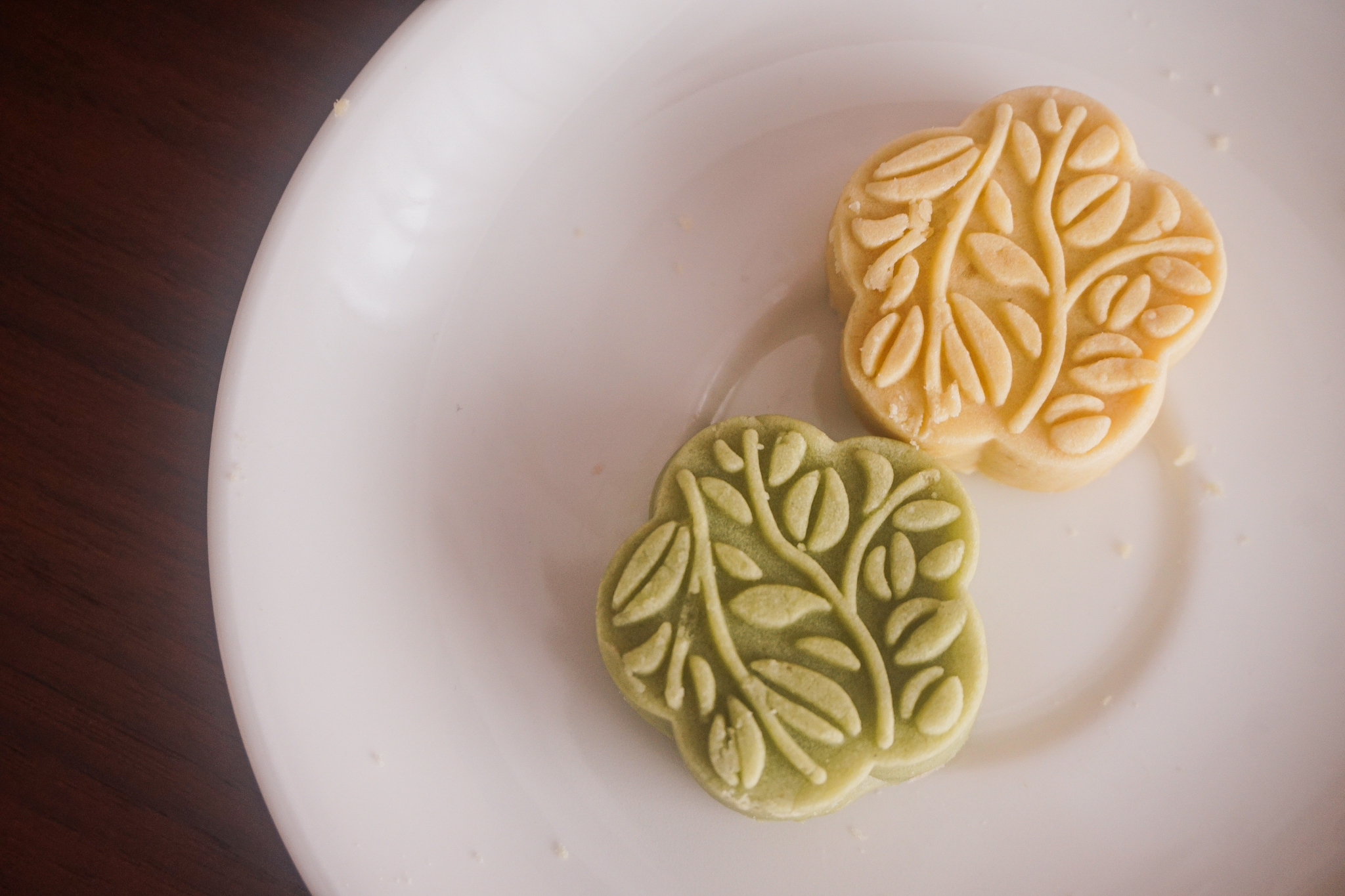
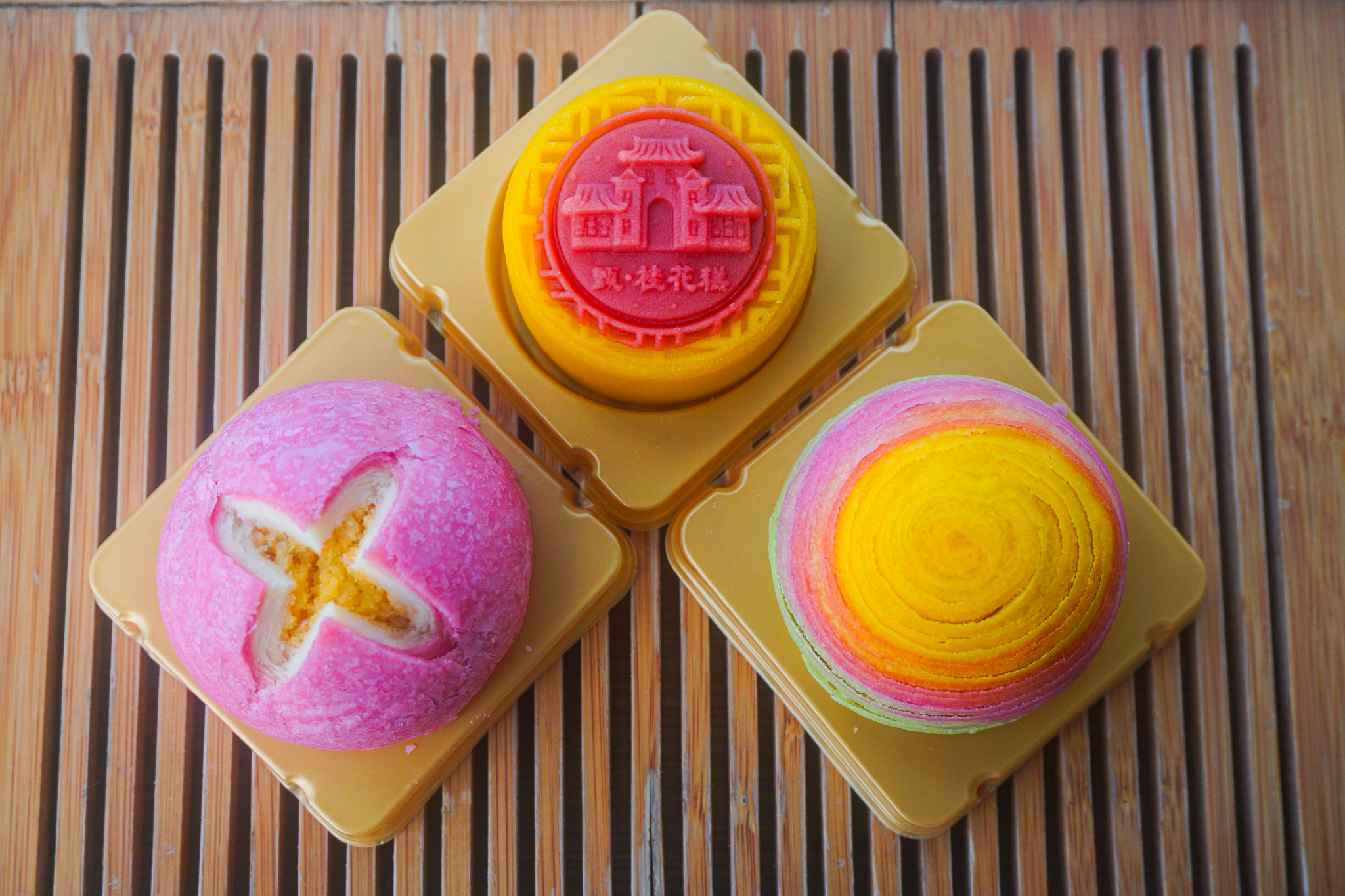
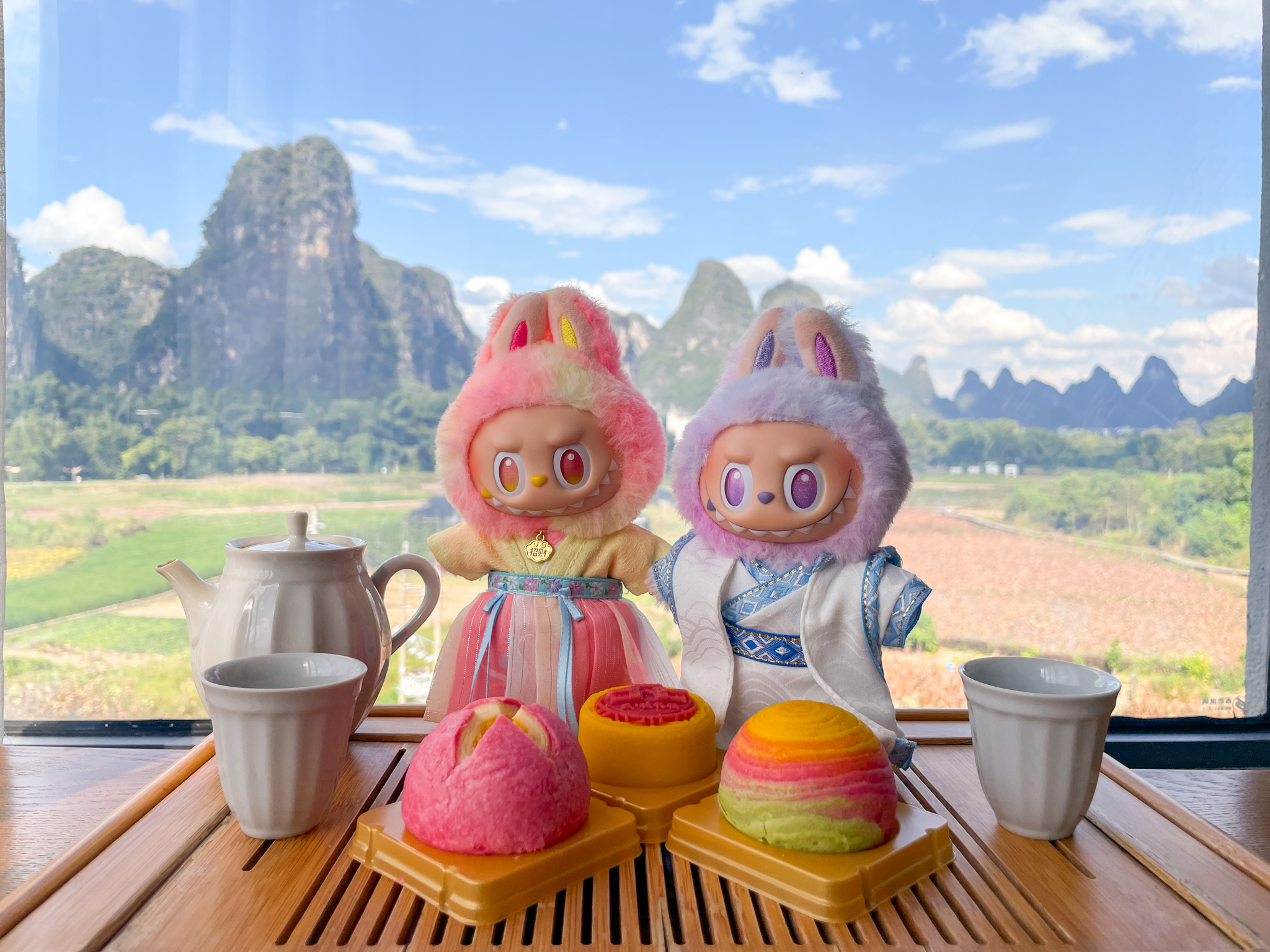
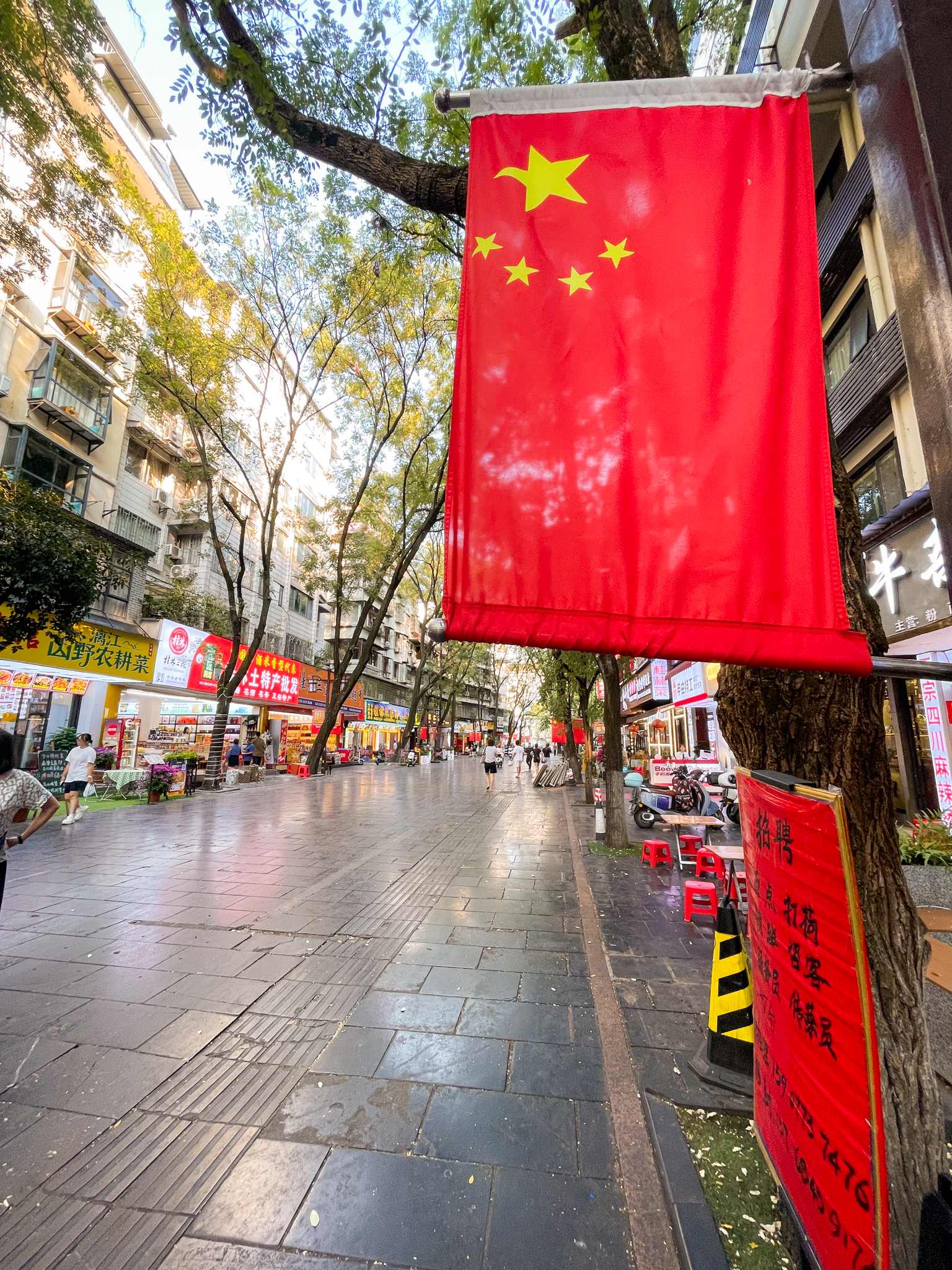
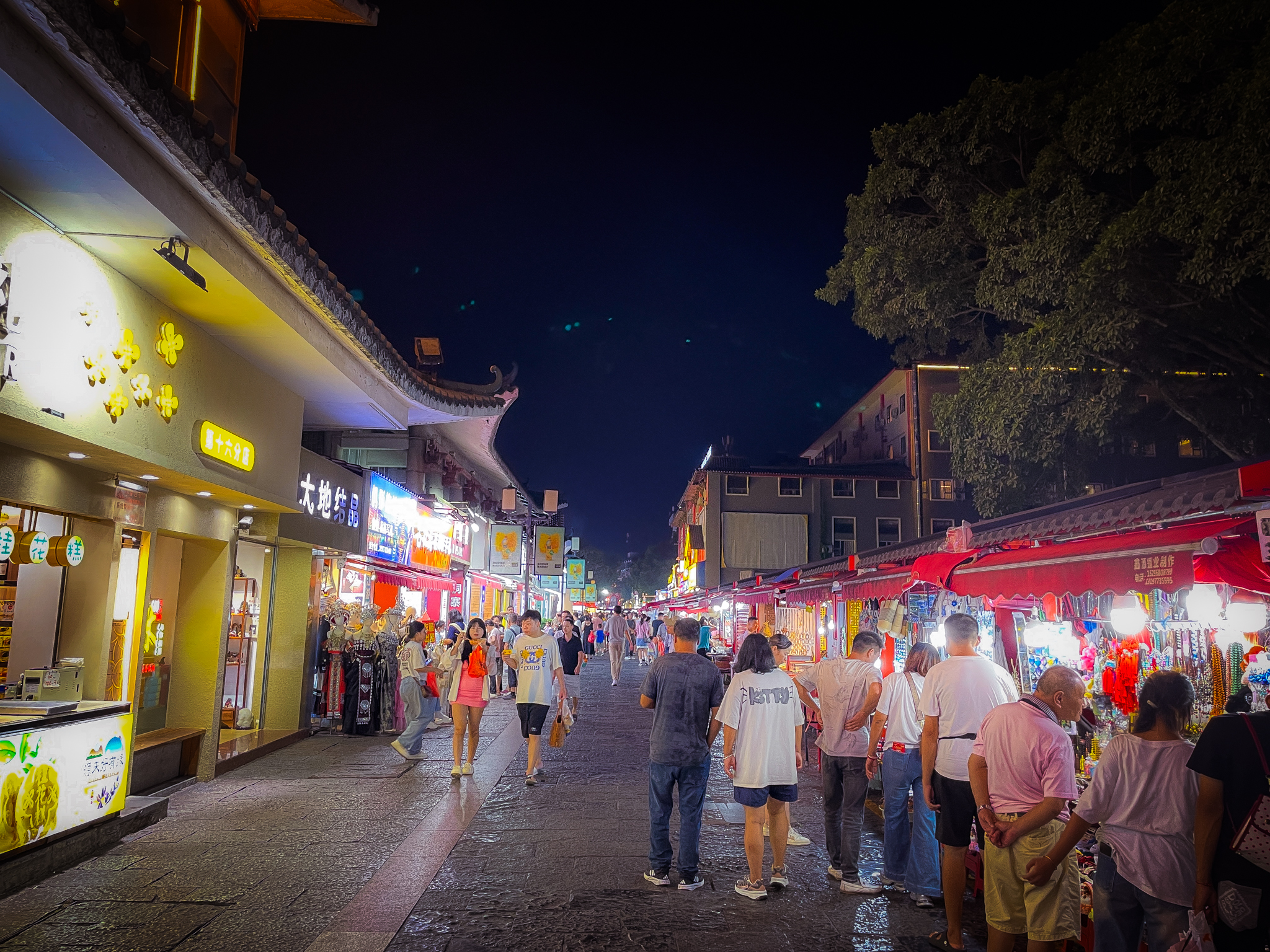
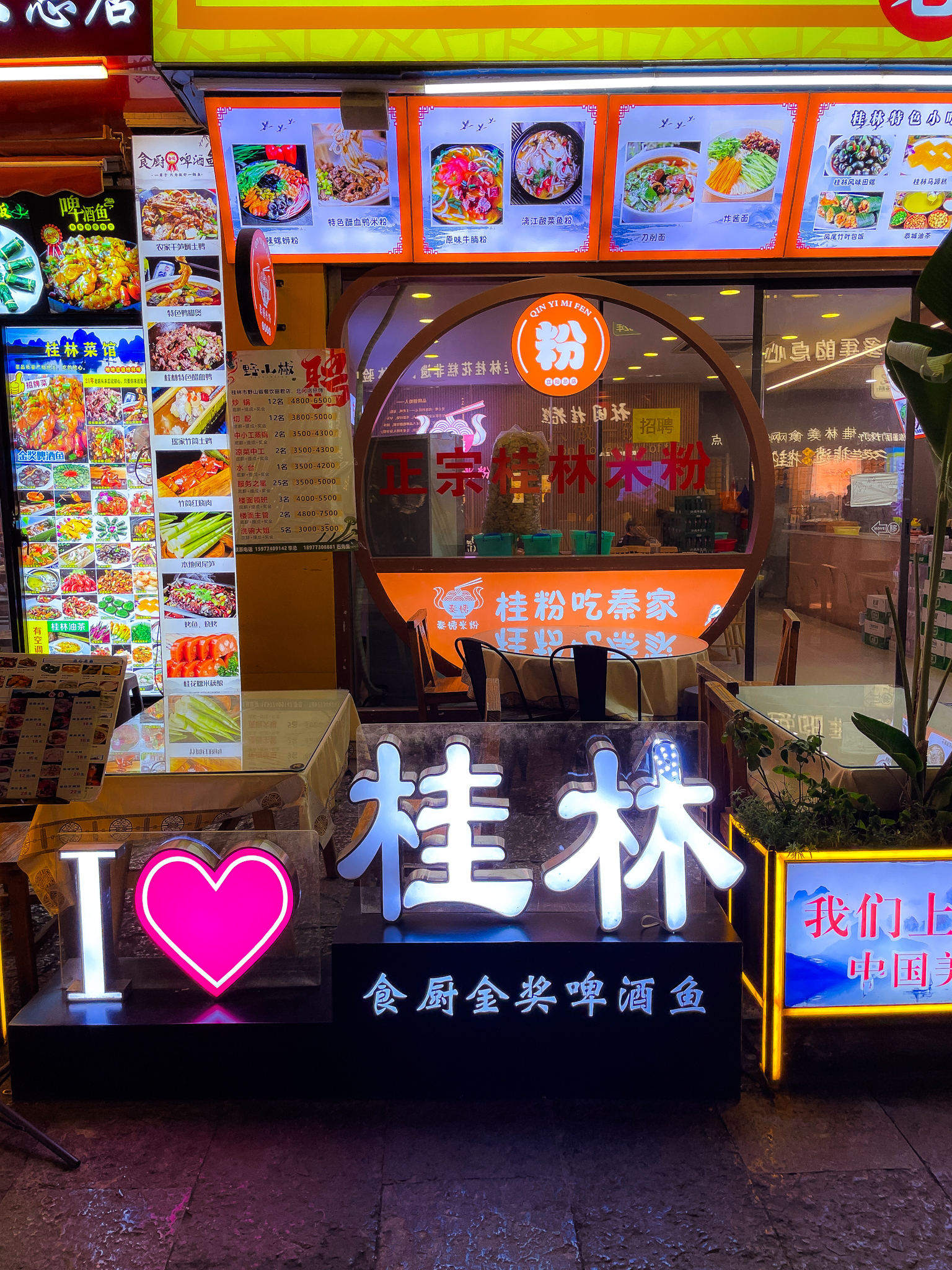
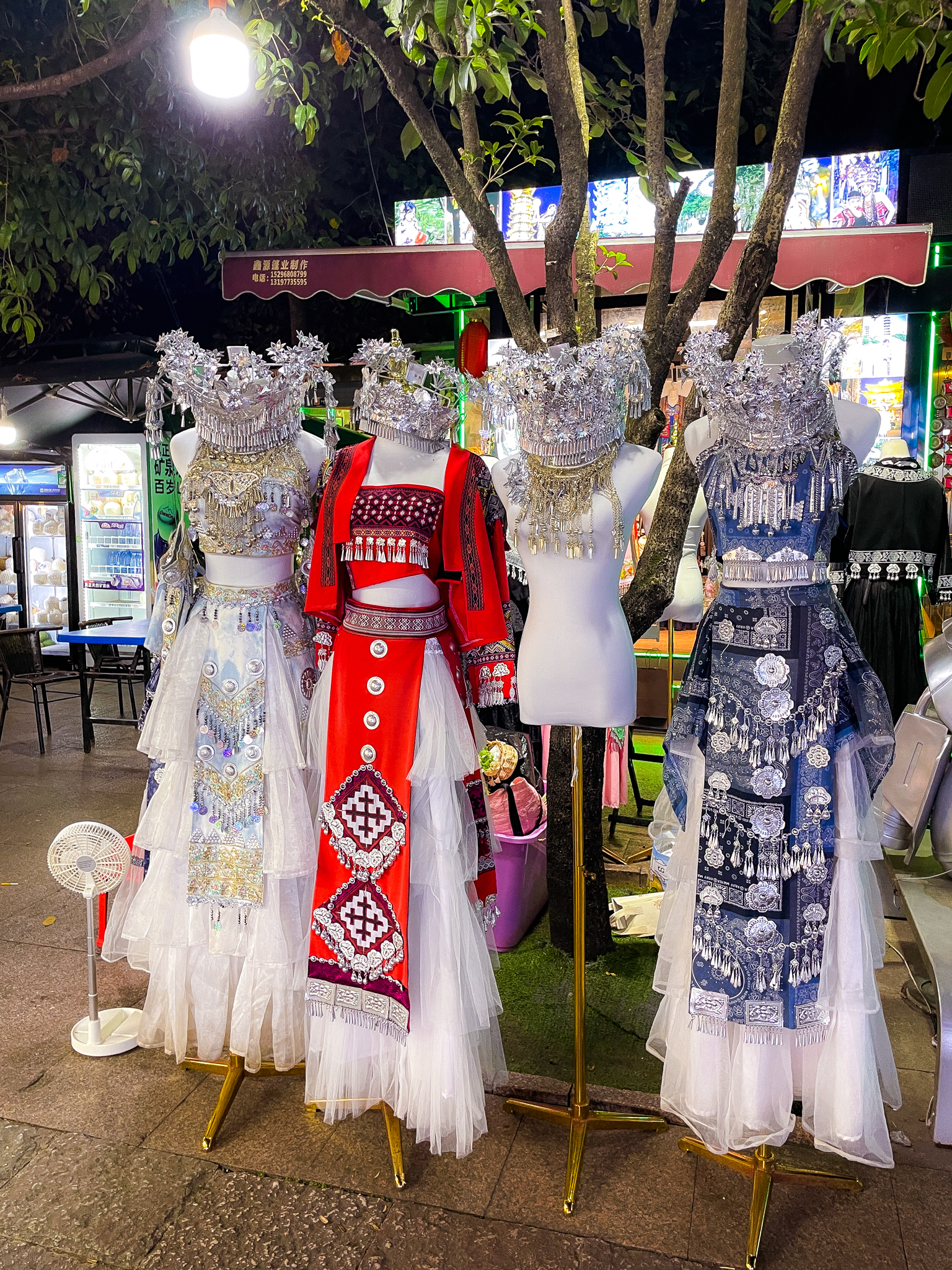
Considering that the literal translation of Guilin is “Osmanthus Forest,” it would be a complete tourist fail if one visits Guilin without hunting down osmanthus desserts. The most convenient area to do so would be to visit Zhengyand Road (正阳步行街), a long 600 plus metres pedestrian-only street that comes alive particularly in the evening. It is filled with a dizzying array of trinket shops and street food shops. Don’t miss:
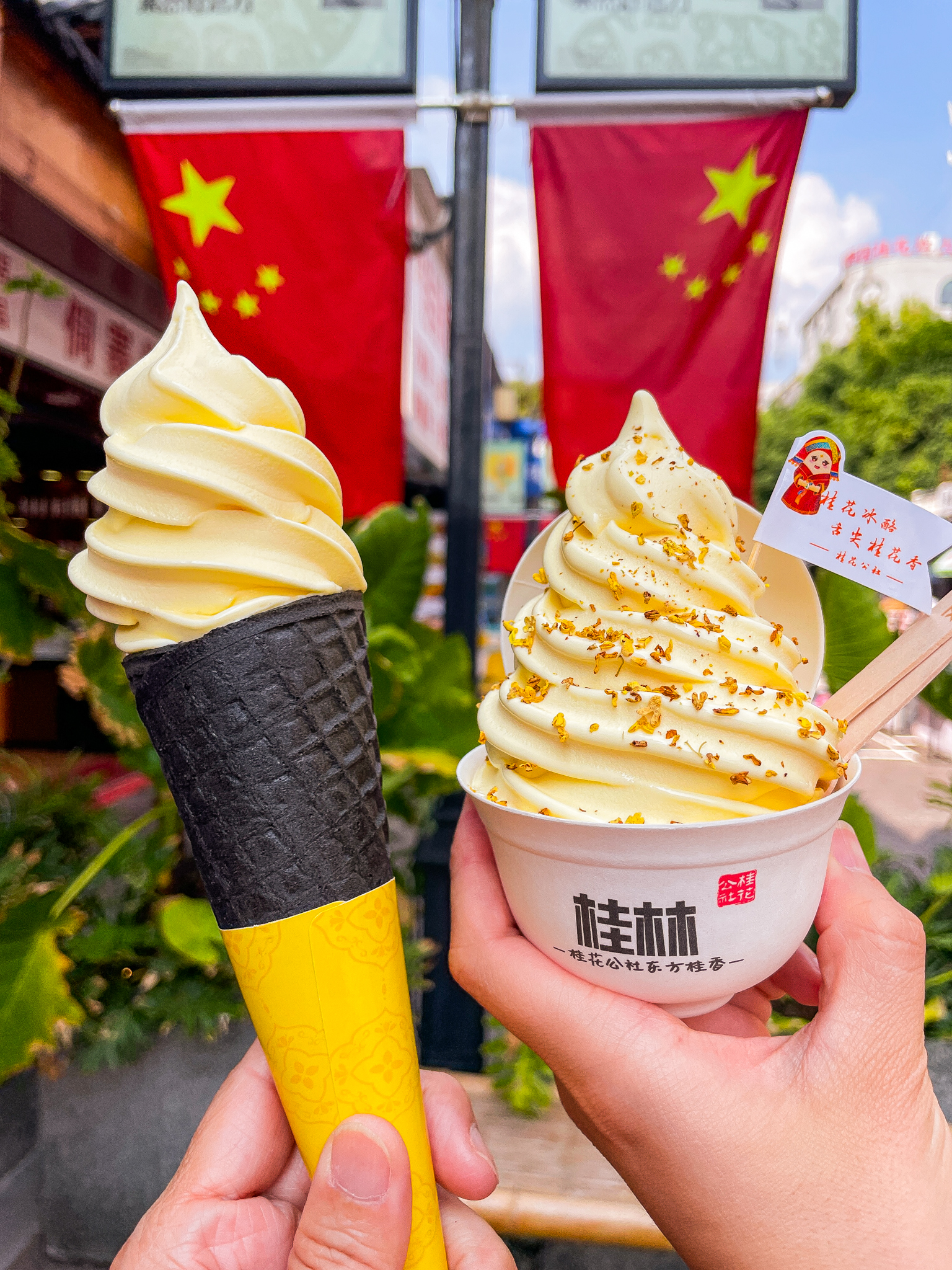
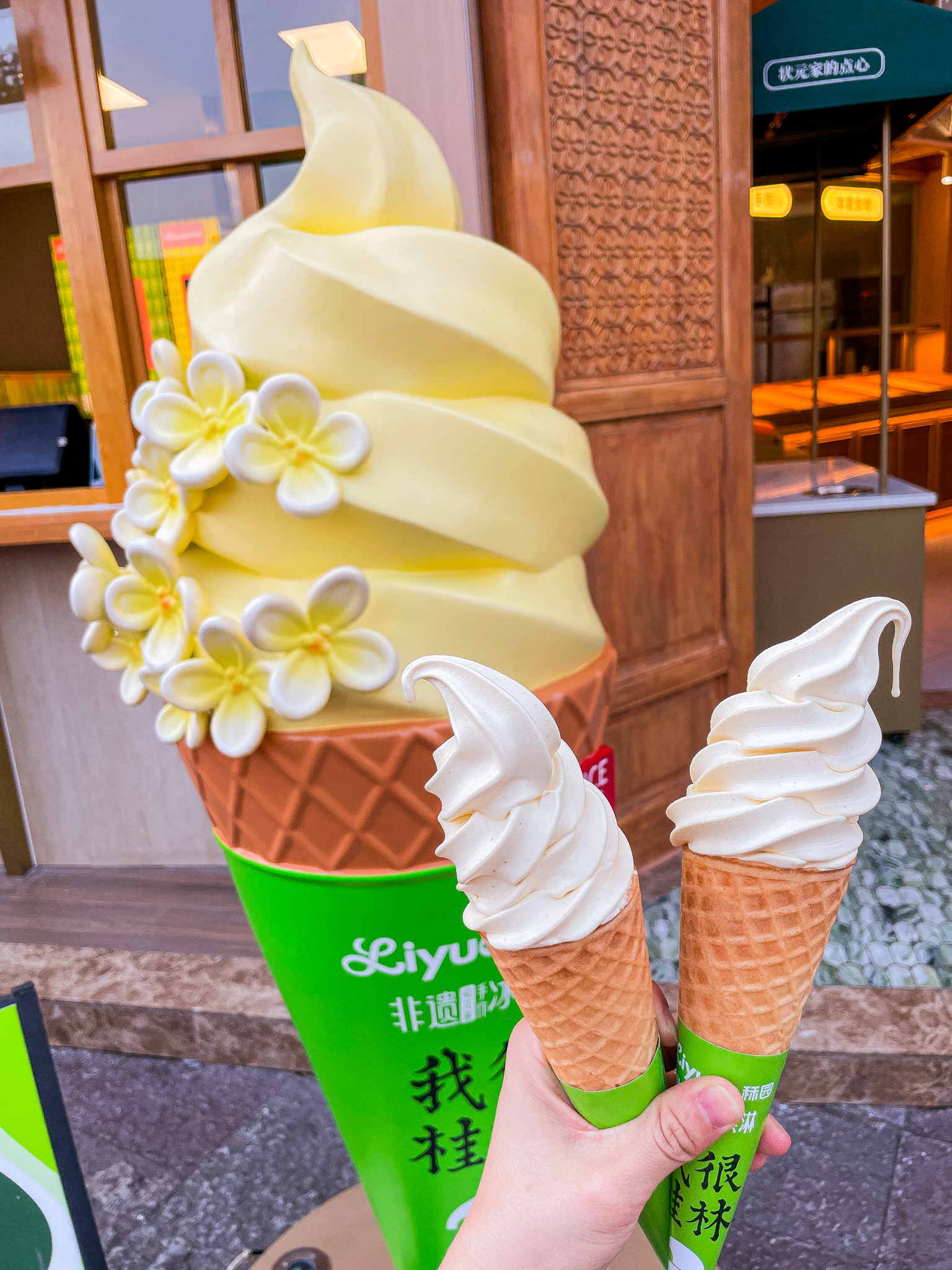
 Osmanthus ice cream from Osmanthus Commune (less than RMB 20), intersection of Zhengyang Road and Jiefang East Road.
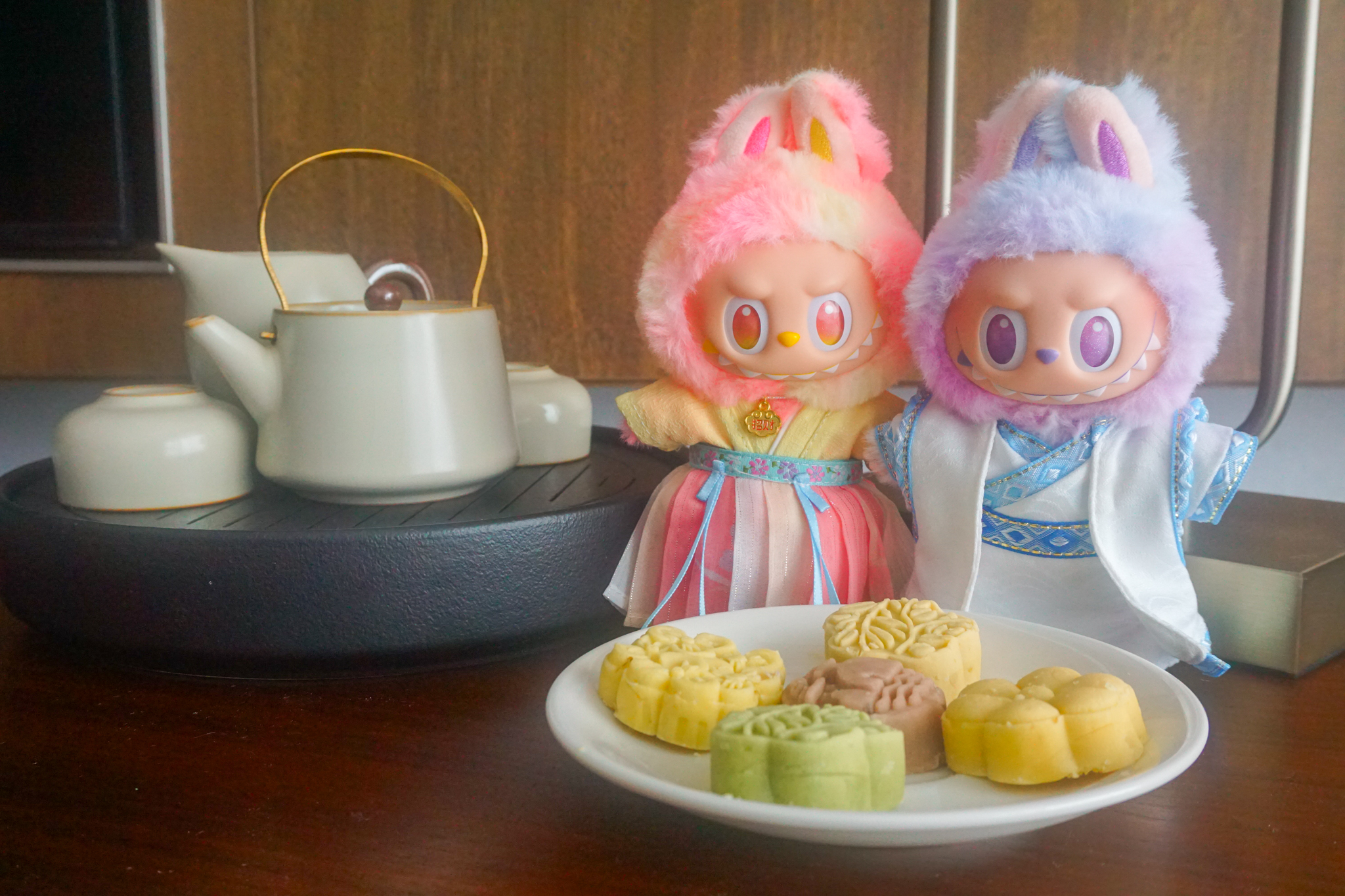
- Osmanthus pastries (桂花糕) from Liyuan Bakery (RMB 2-5 a piece), 15-19 Zhengyang Road.
Travel Tip #2: Book luxurious scenic hotels
When we were planning our trip to Guilin and Yangshuo (or in fact, any trip to China for that matter), we have found that the overwhelming majority of travel blogs focus on “budget travel.” Many of them also perpetuate a myth that the country has an under-developed tourist infrastructure … which could not be further from the truth. Short story, if you stay at cheap-as-chips hotel anywhere in the world, you will get a cheap-as-chips experience. For far less the price of a hotel in Europe (or NYC, here’s looking at you charging minimum USD $350 per night at a 3-star hotel…), we highly recommend selecting a high-end hotel with a view when visiting Guilin and Yangshuo. Here are the hotels we and family stayed at during two seperate trips — reservations can easily be made via Trip.com:
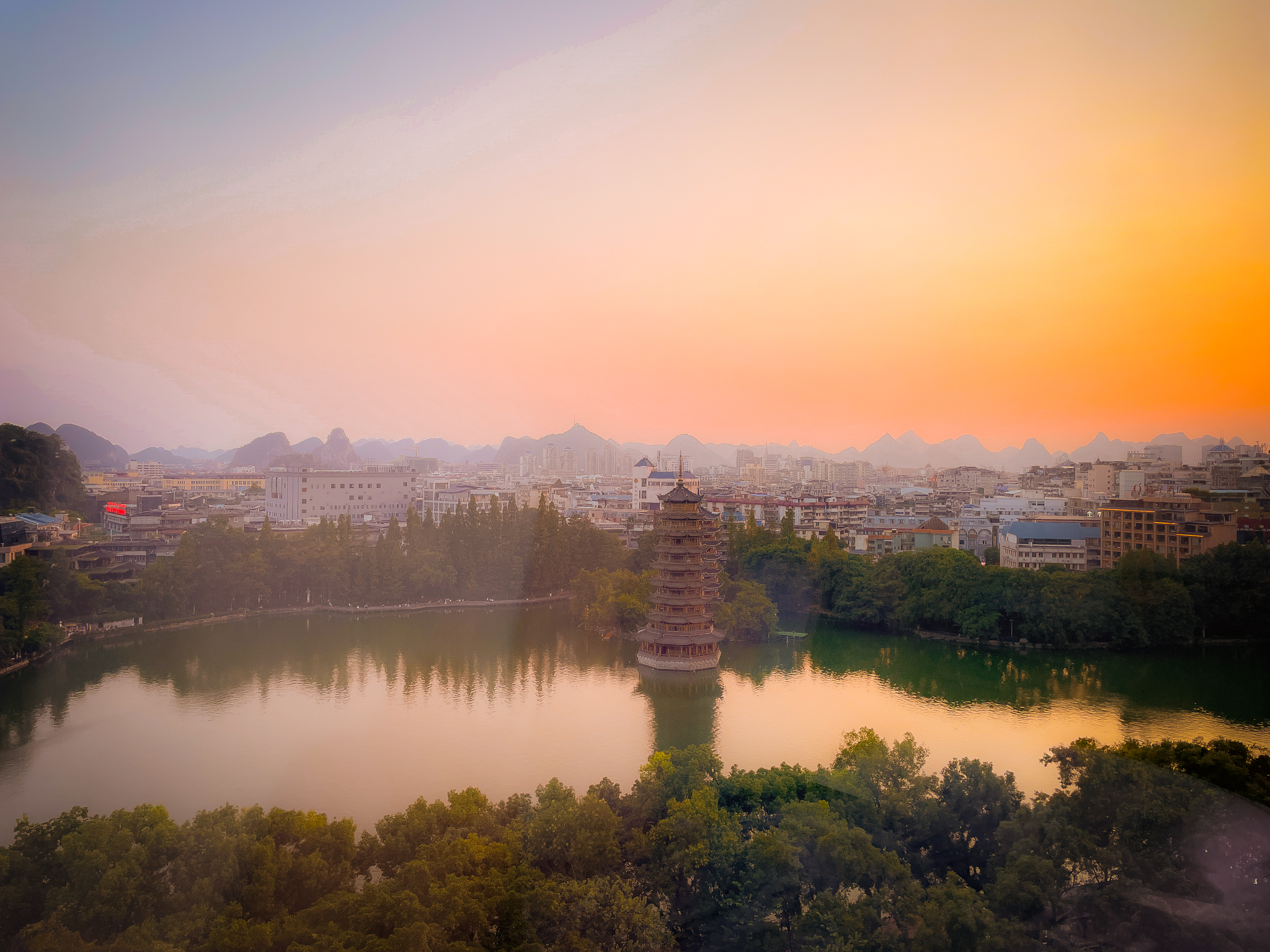
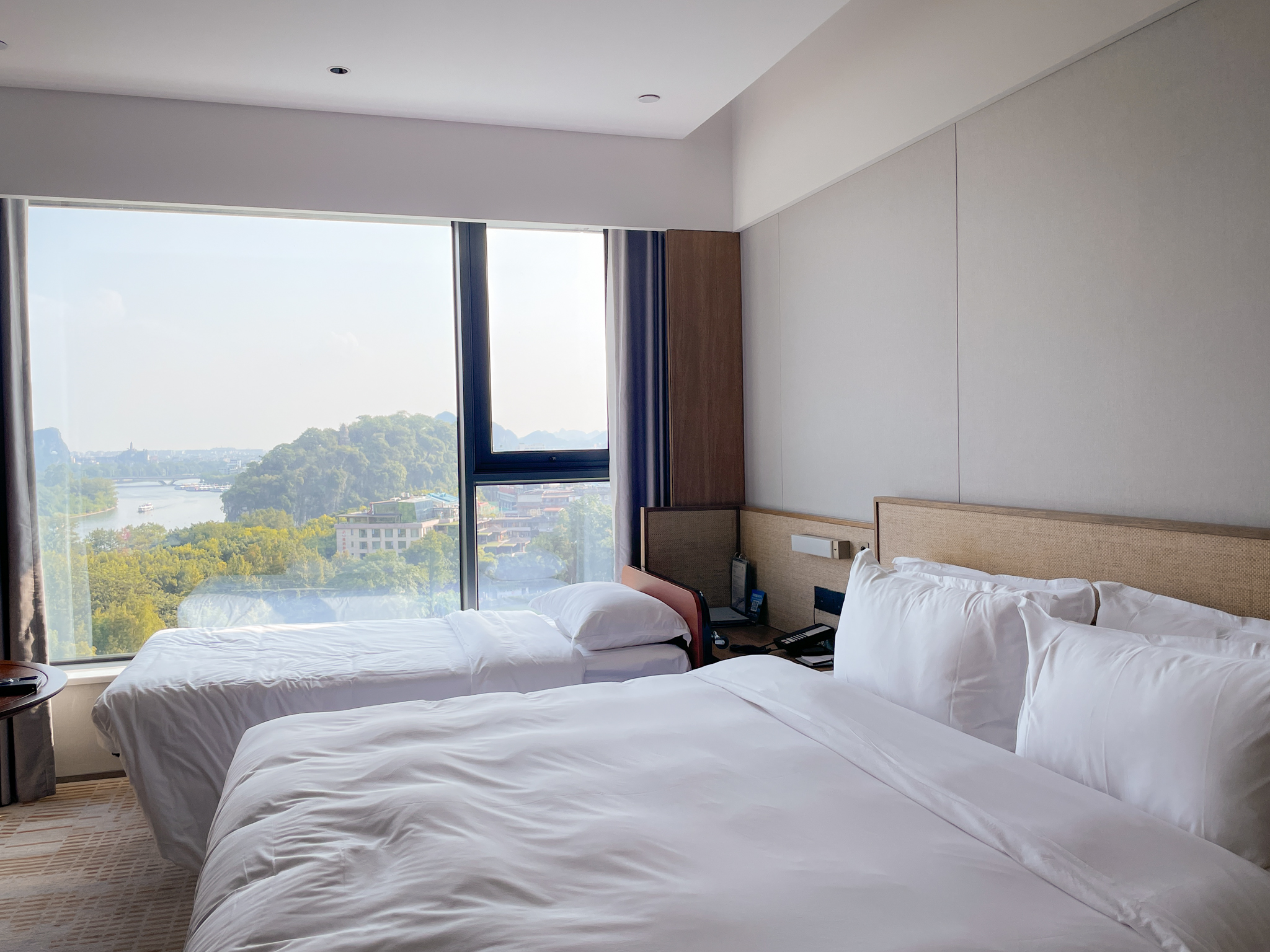
- Guilin – Guilin Pushang Hotel VIP Tower – this is a superbly elegant modern hotel, affording both sunrise and sunset views of the Sun and Moon Pagoda and lake area. We could even see the Elephant Trunk Hill from our hotel room. It is also right next door to Zhengyang Road, making it exceedingly convenient for food adventures too.
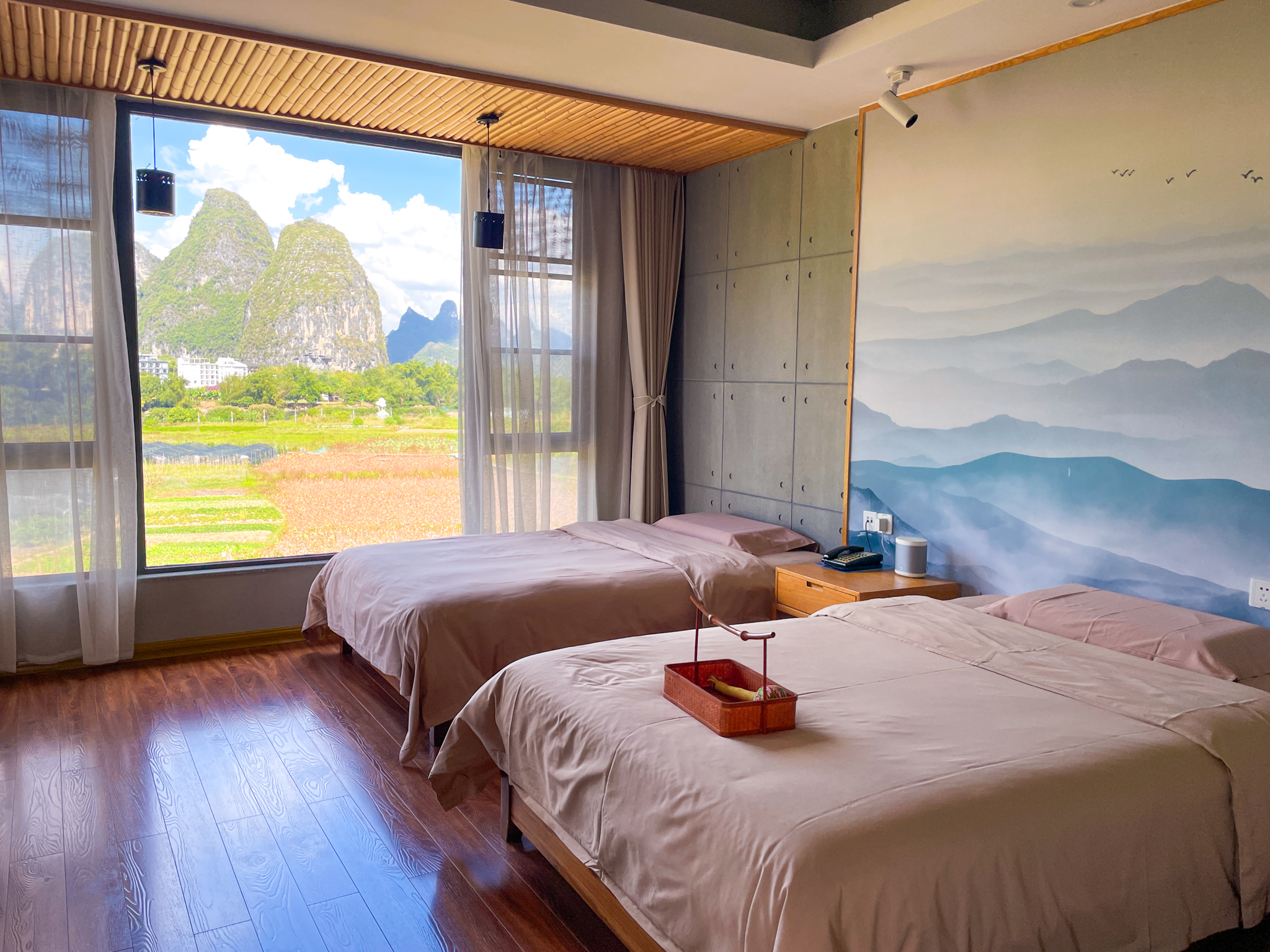
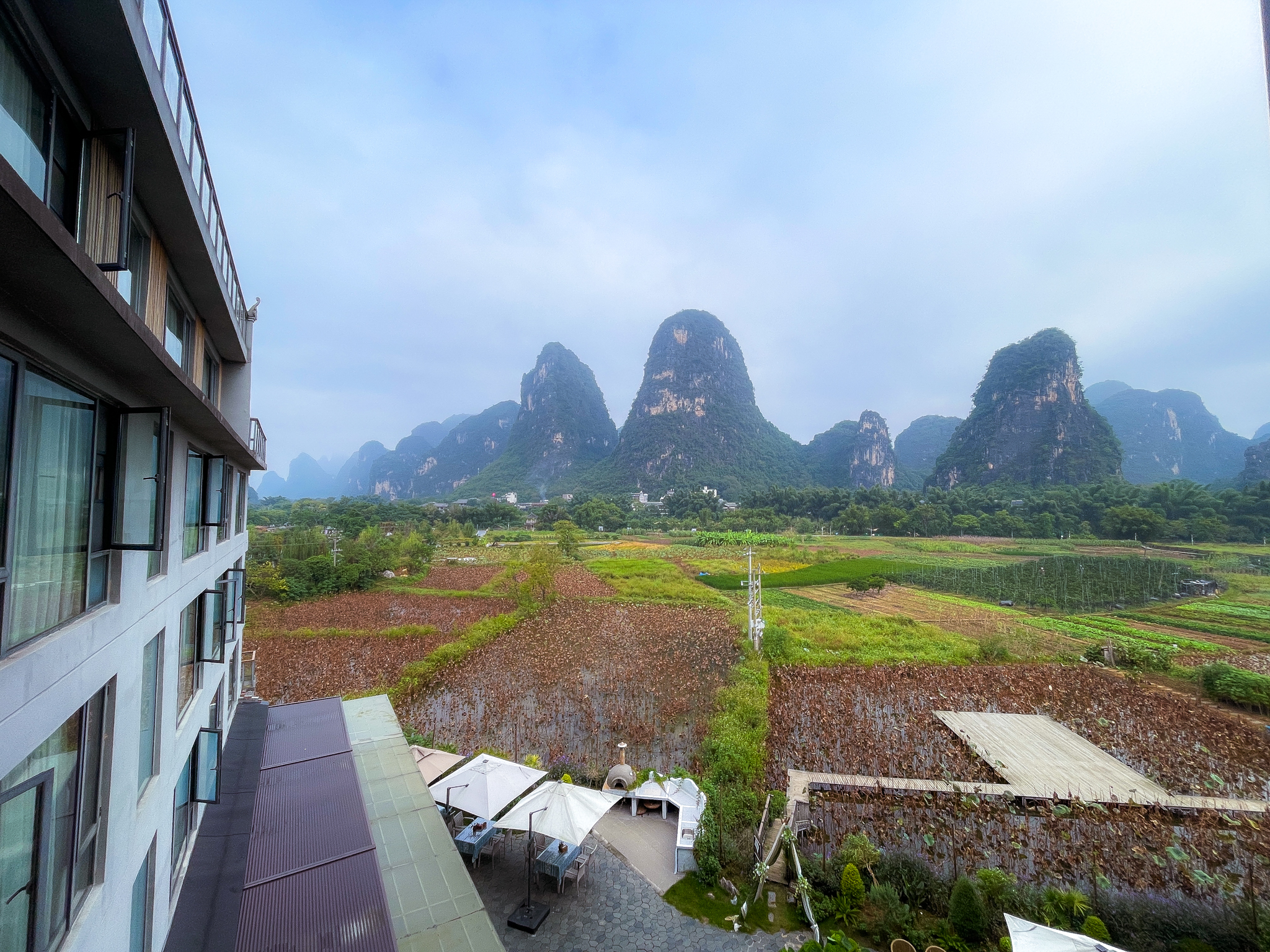
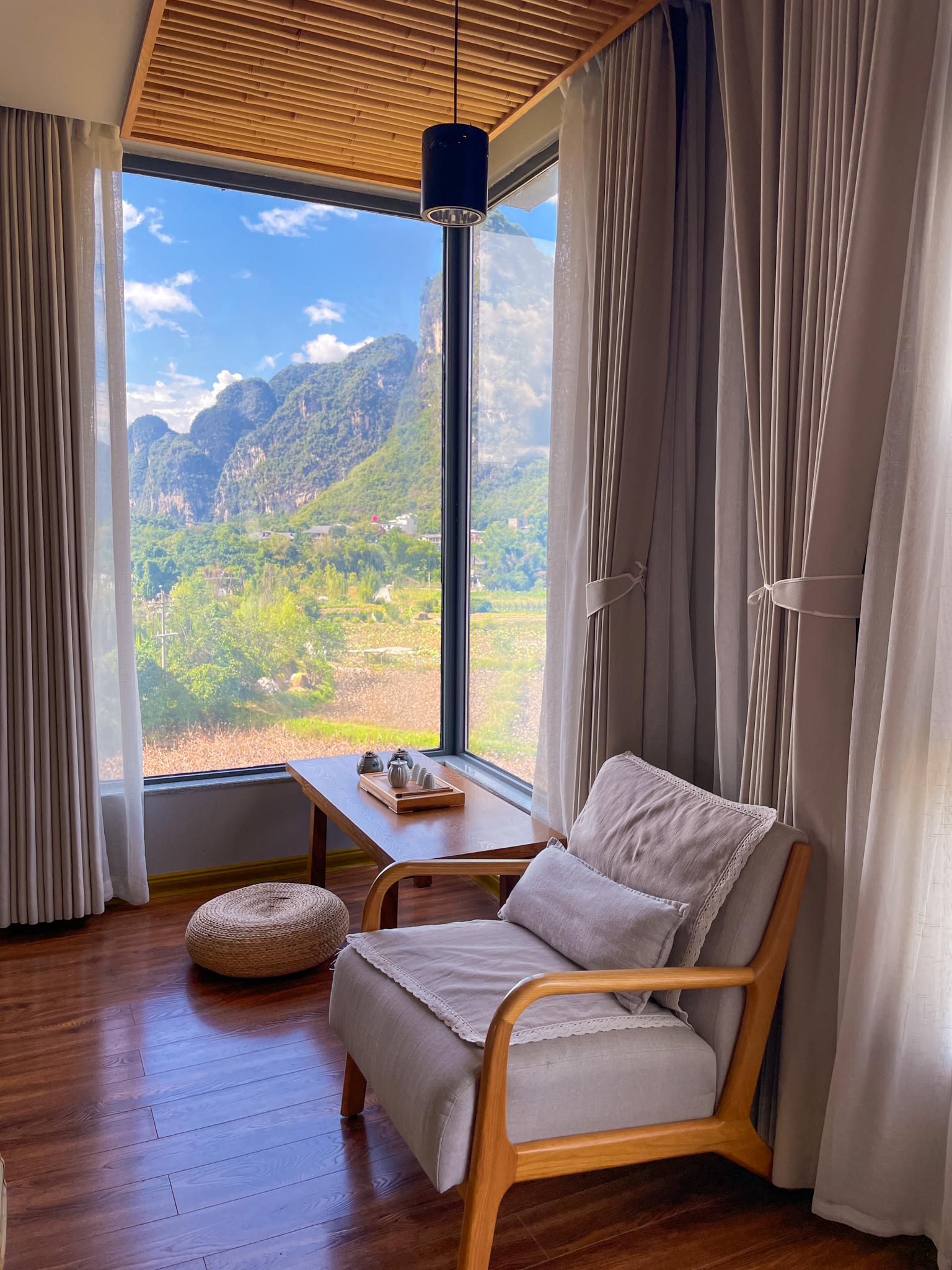
- Yangshuo (river level) – Zen Garden Resort and Apsara Lodge – both of these hotels are located about 20 minutes from the main Yangshuo city centre. Whereas Apsara Lodge offers direct river views, Zen Garden showcases a panorama of Yangshuo’s karst mountain scenery and surrounding farmland. Don’t miss early morning taichi from the viewing platform at Zen Garden.
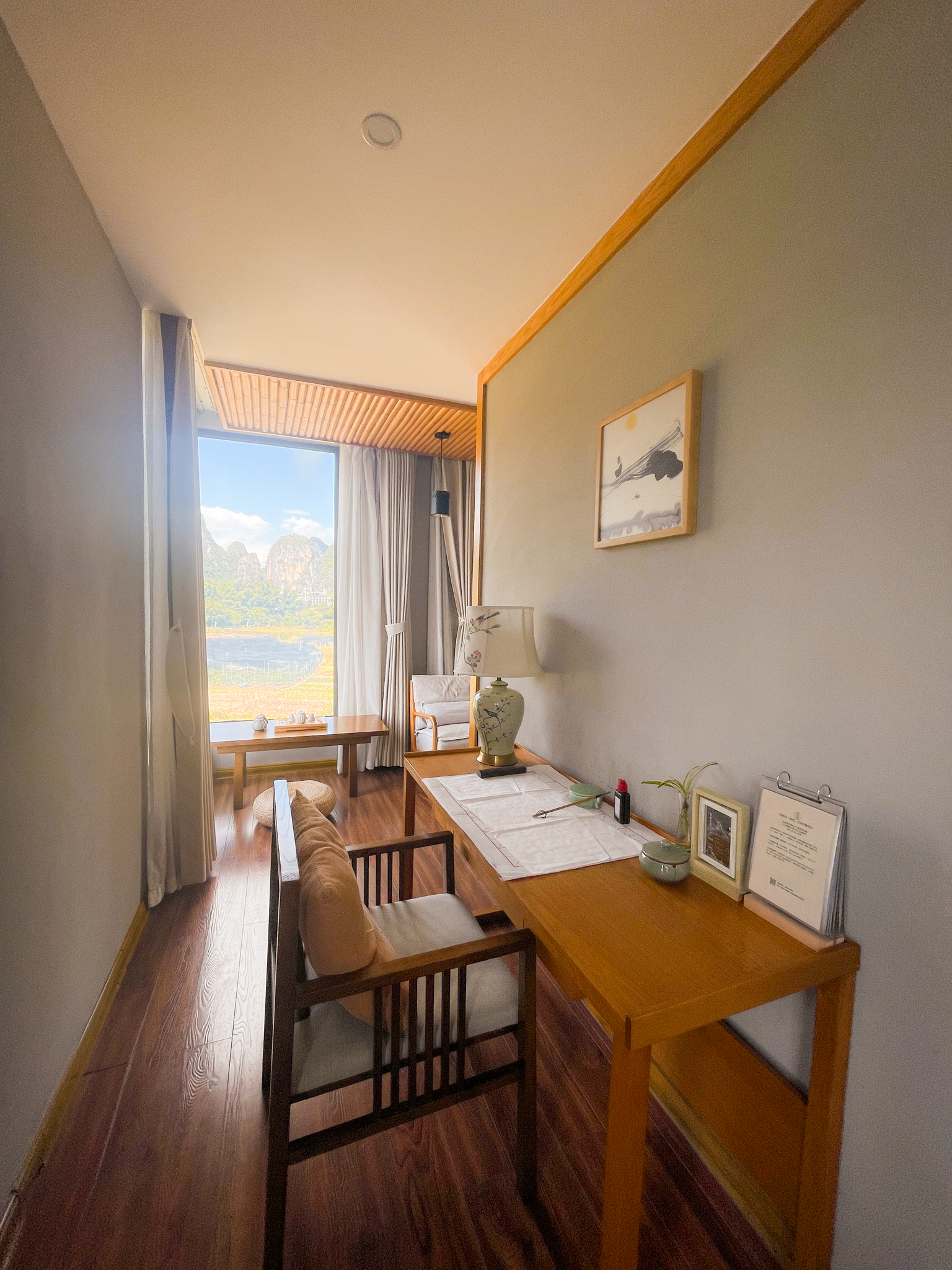
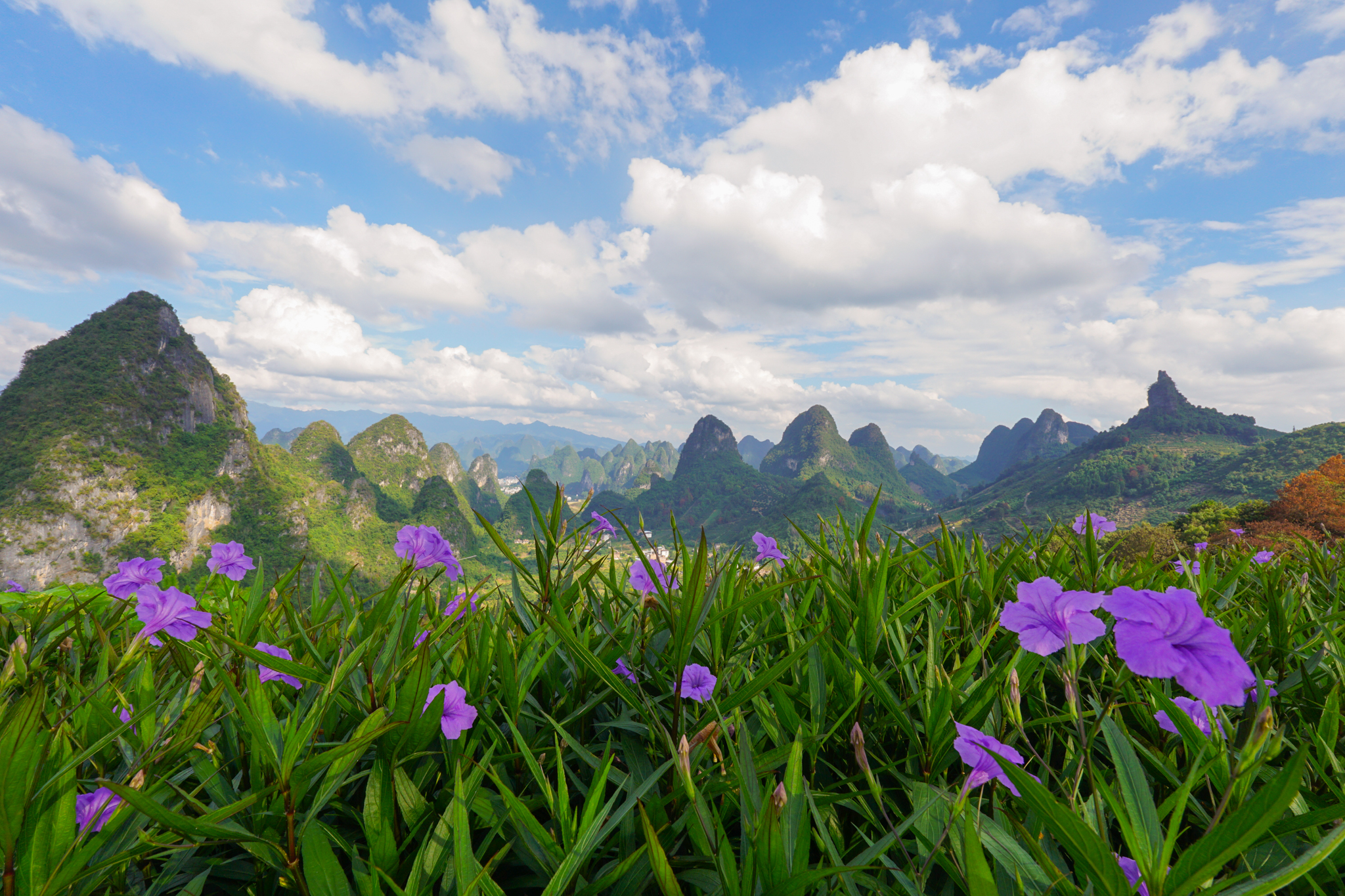
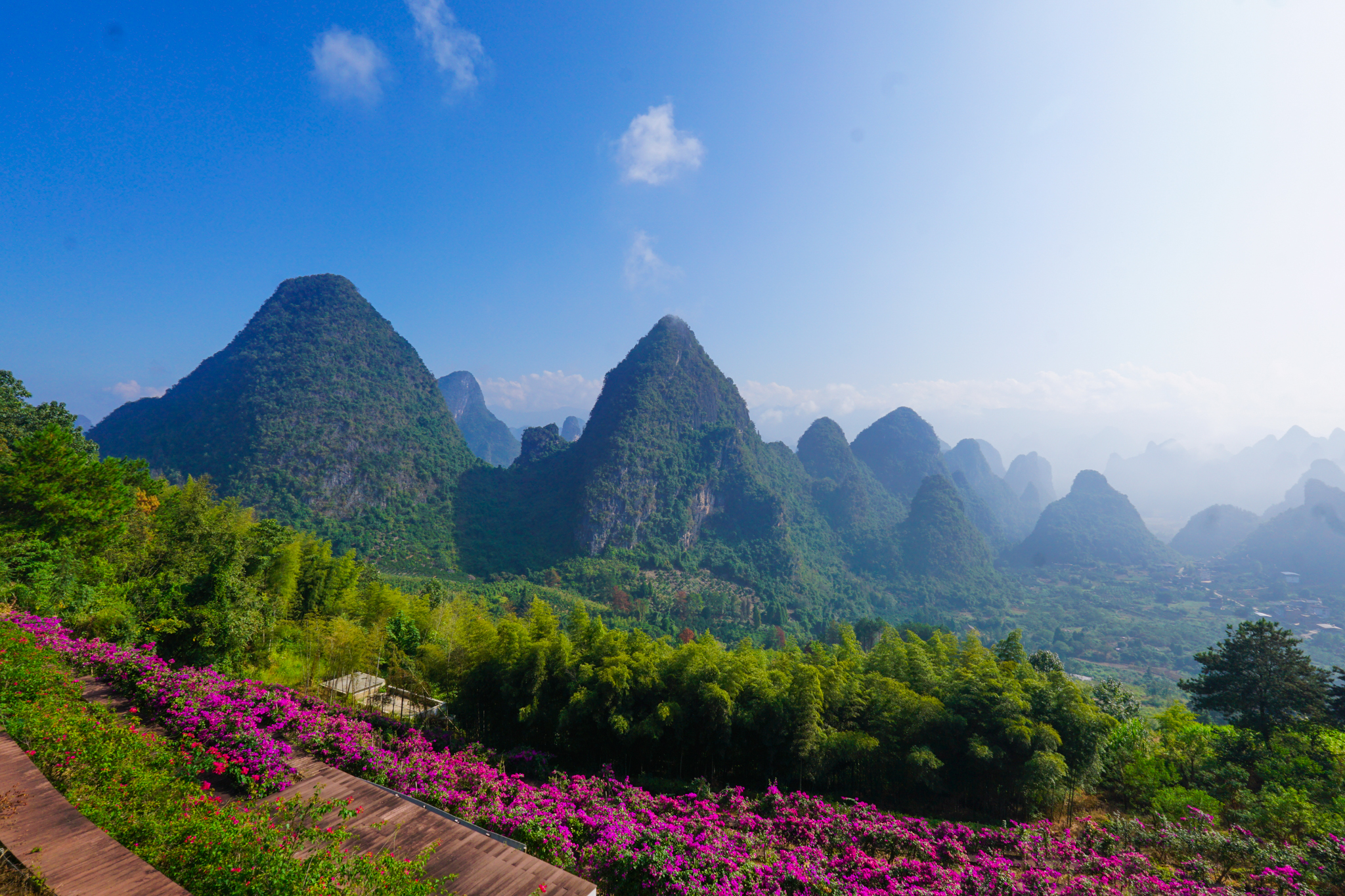
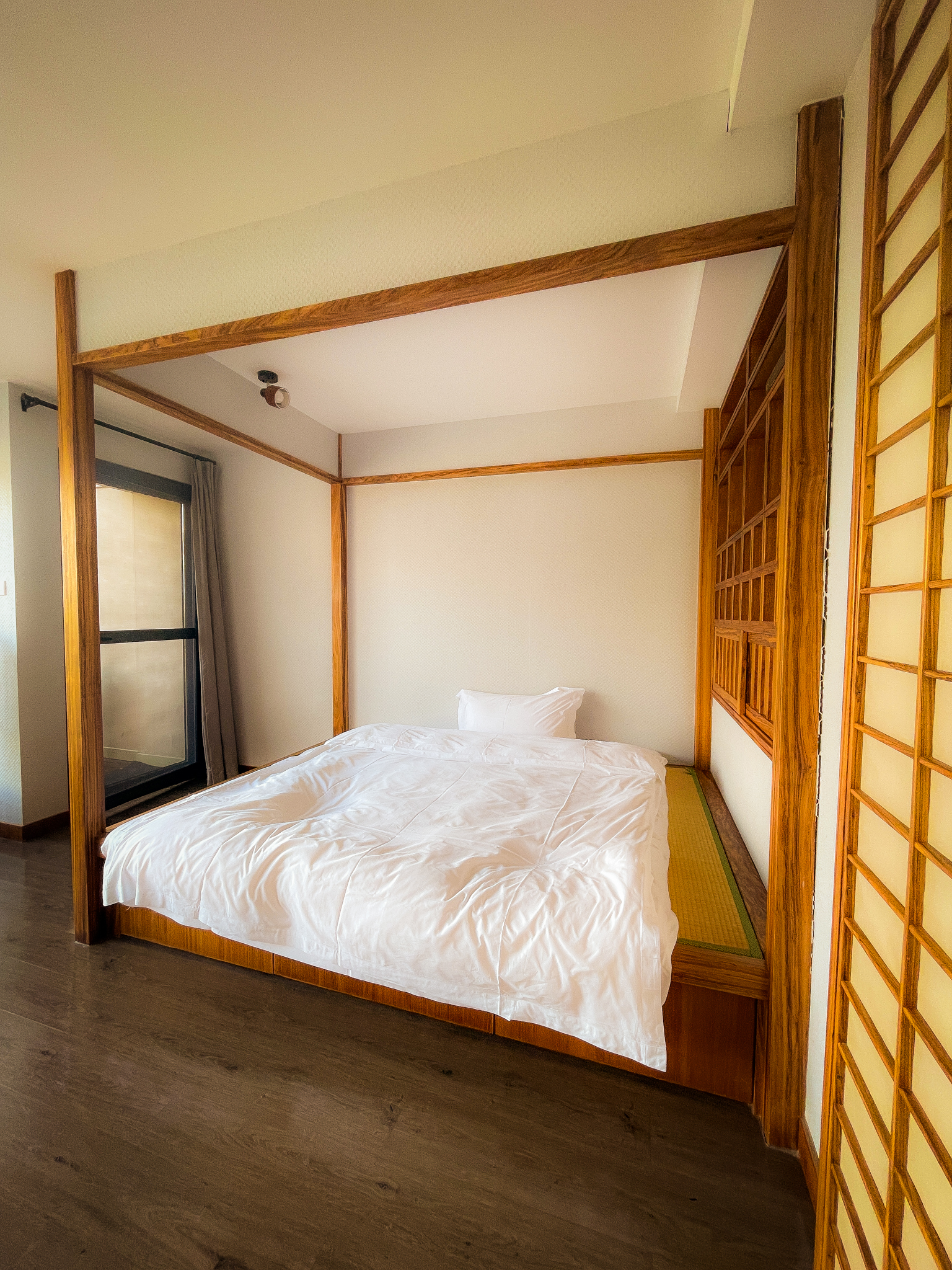
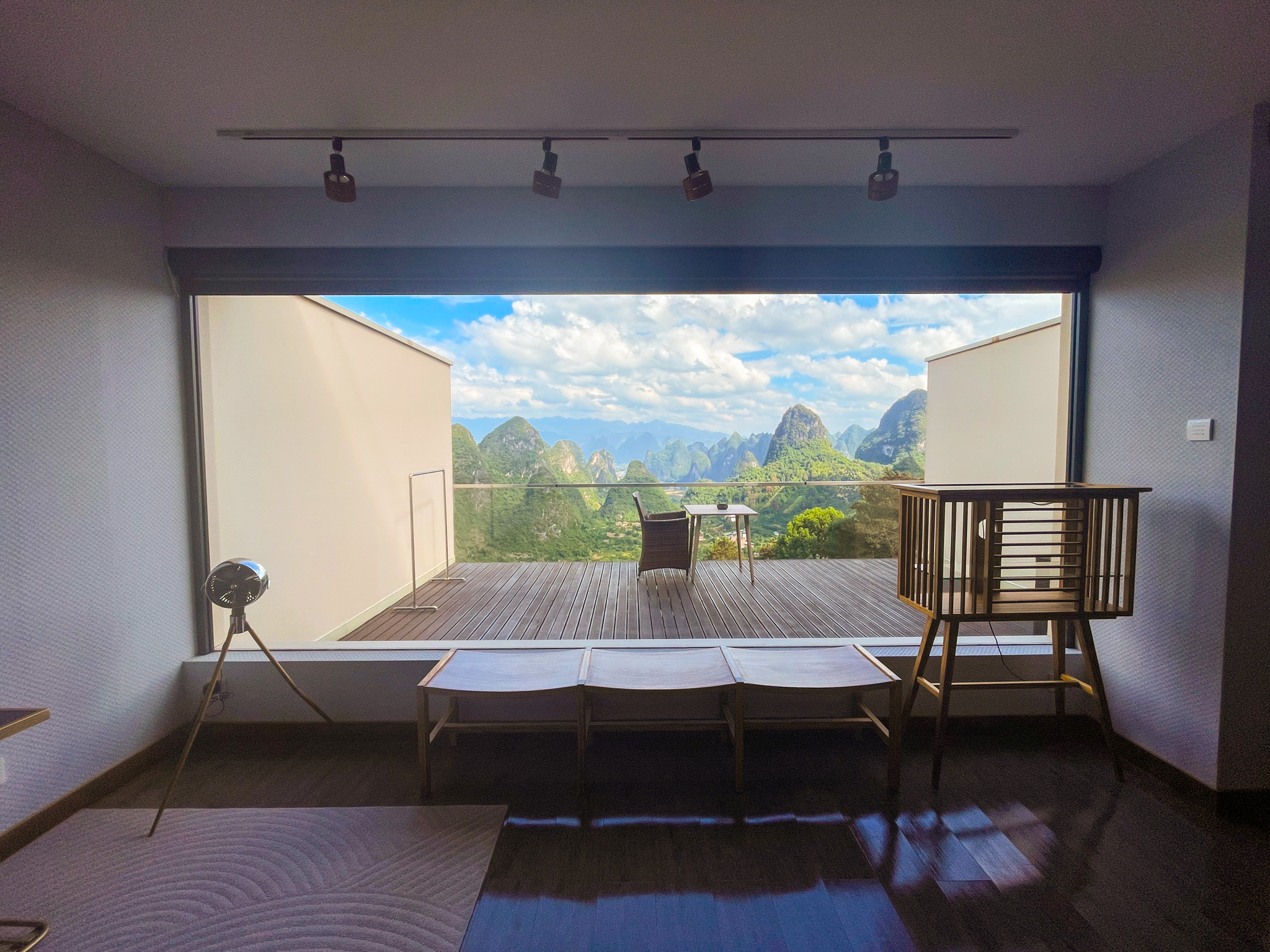
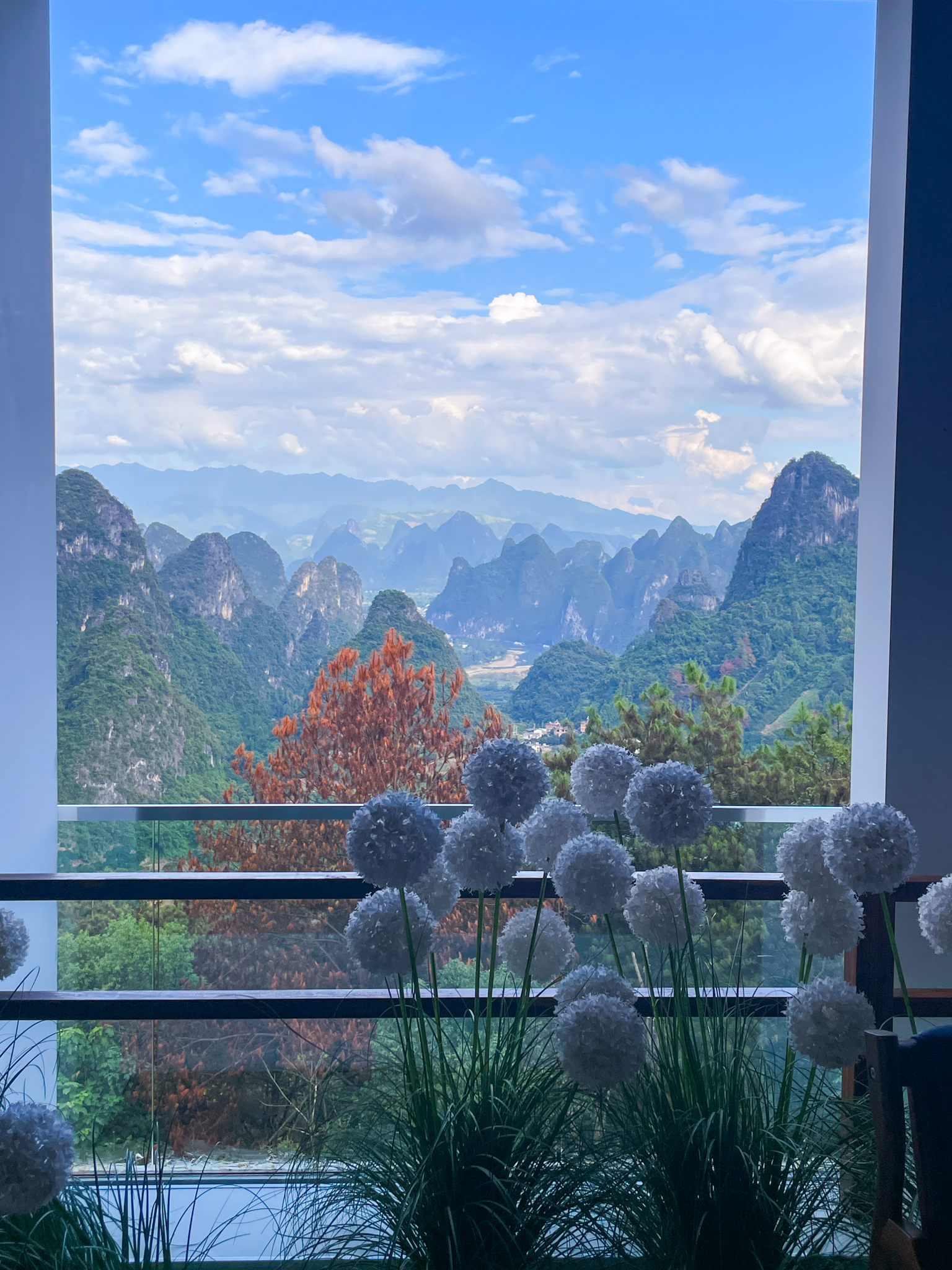
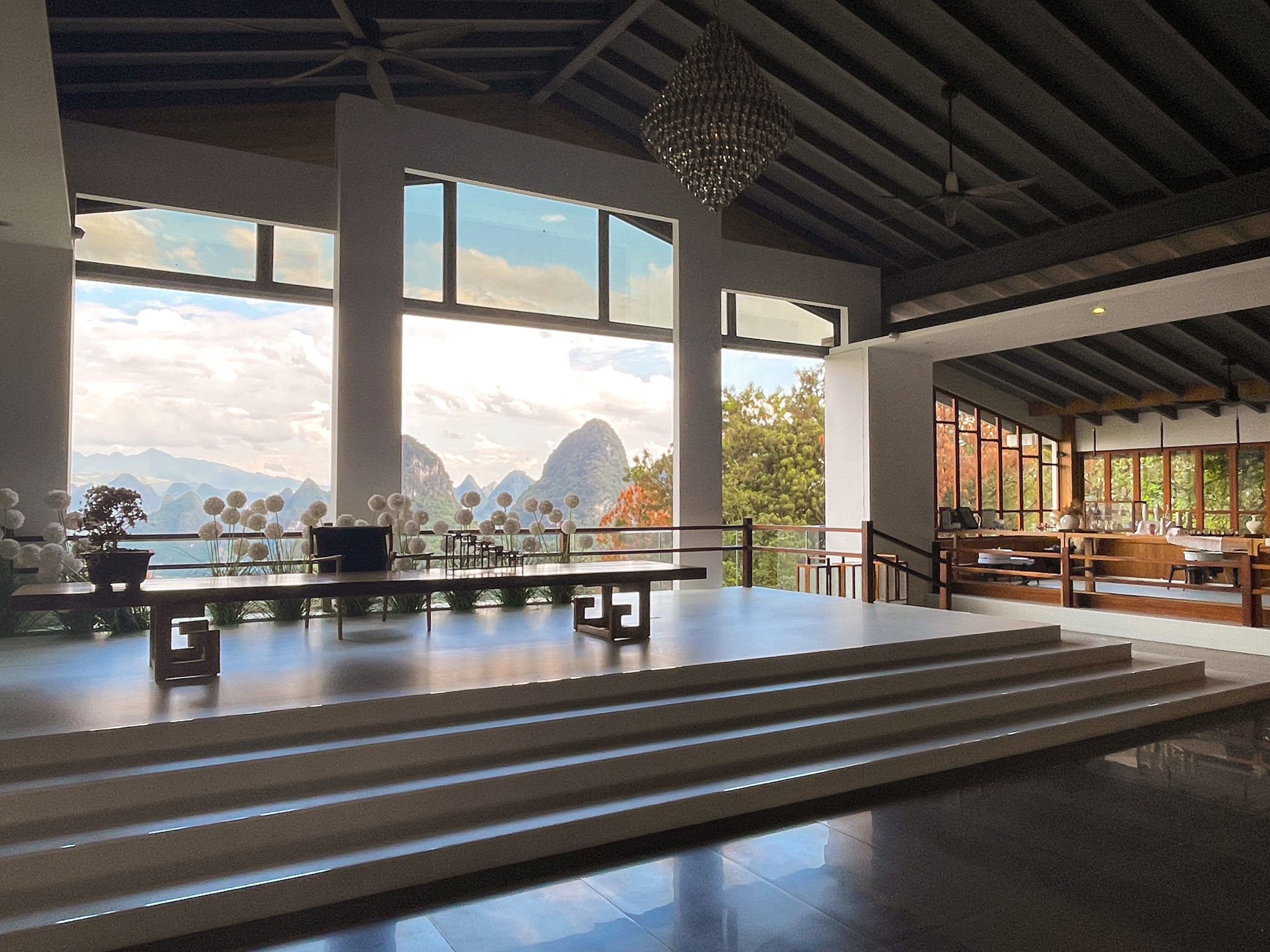
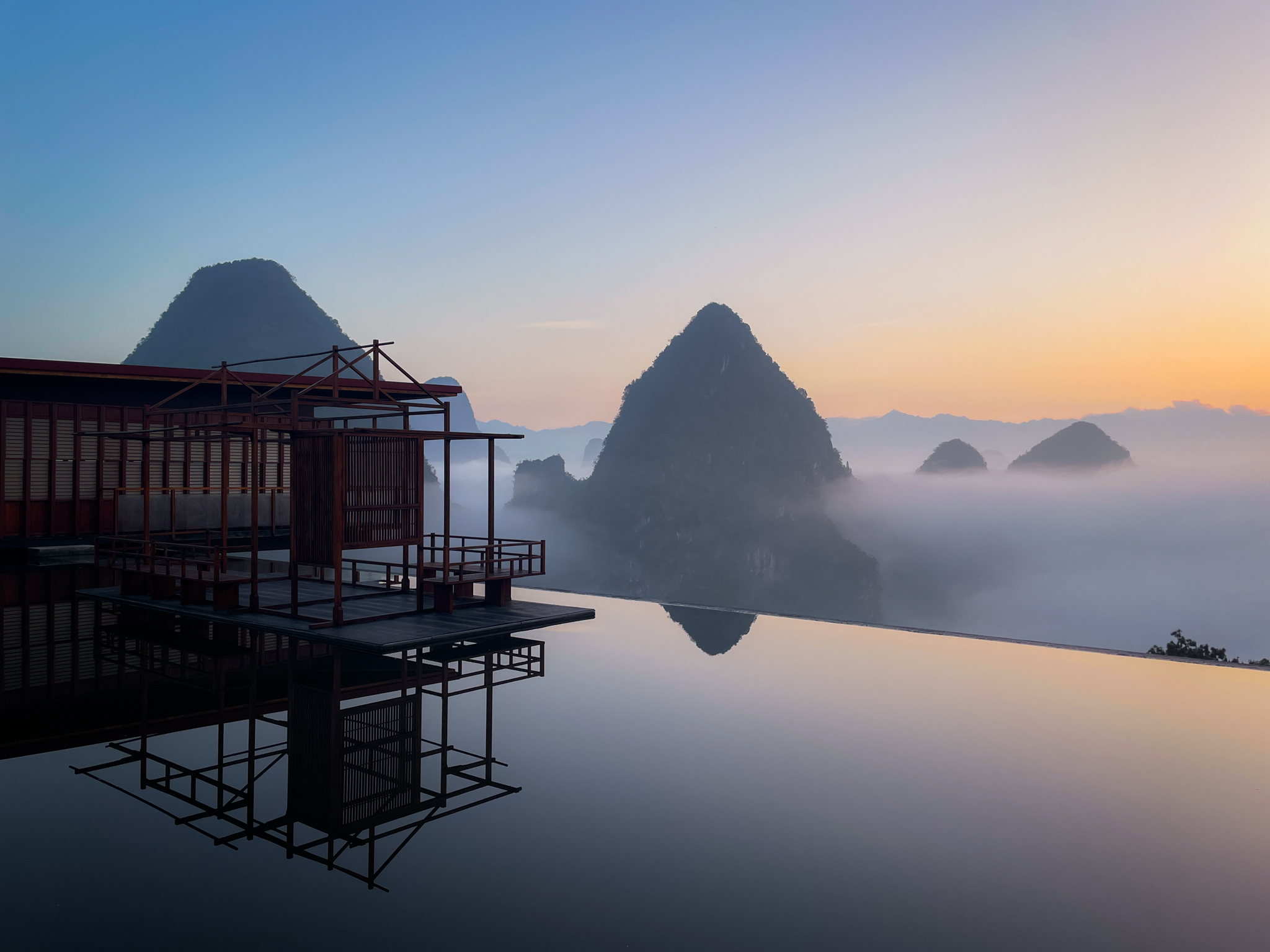
- Yangshuo (mountain top) – Misty Wonderland – alongside Yuanyang’s Duoyishu Hotel and Japan’s Hoshinoya Kyoto, we have firmly placed this hotel on our “world’s most scenic hotels list.” Possessing a rarefied ambience, Misty Wonderland is simultaneously extravagant and minimalist. The room furnishings are spartan, with no textures or colours to fight with the breathtaking mountain scenery views. By contrast, the communal lounge areas are so grand in proportions that we thought an emperor might hold court at this hotel. In truth, the expansive grounds – including an infinity pool that reflects the cloud-draped mountains – makes for wonderful portraiture photography. All food is included at this resort – from breakfast, lunch, dinner to afternoon tea and snacks. Sunrise views here truly redefine the meaning of glorious, and given that you have an utterly private and uninterrupted view from your bedroom, it is an ideal alternative if you are travelling with mobility-challenged persons or you simply do not want to hike in pre-dawn darkness and fight with the crowds at Xianggong Mountain (相公山) (Guilin’s most famous sunrise viewpoint).

Travel Tip #3: Circumnavigate Sun Moon Pagoda Lake in the evening
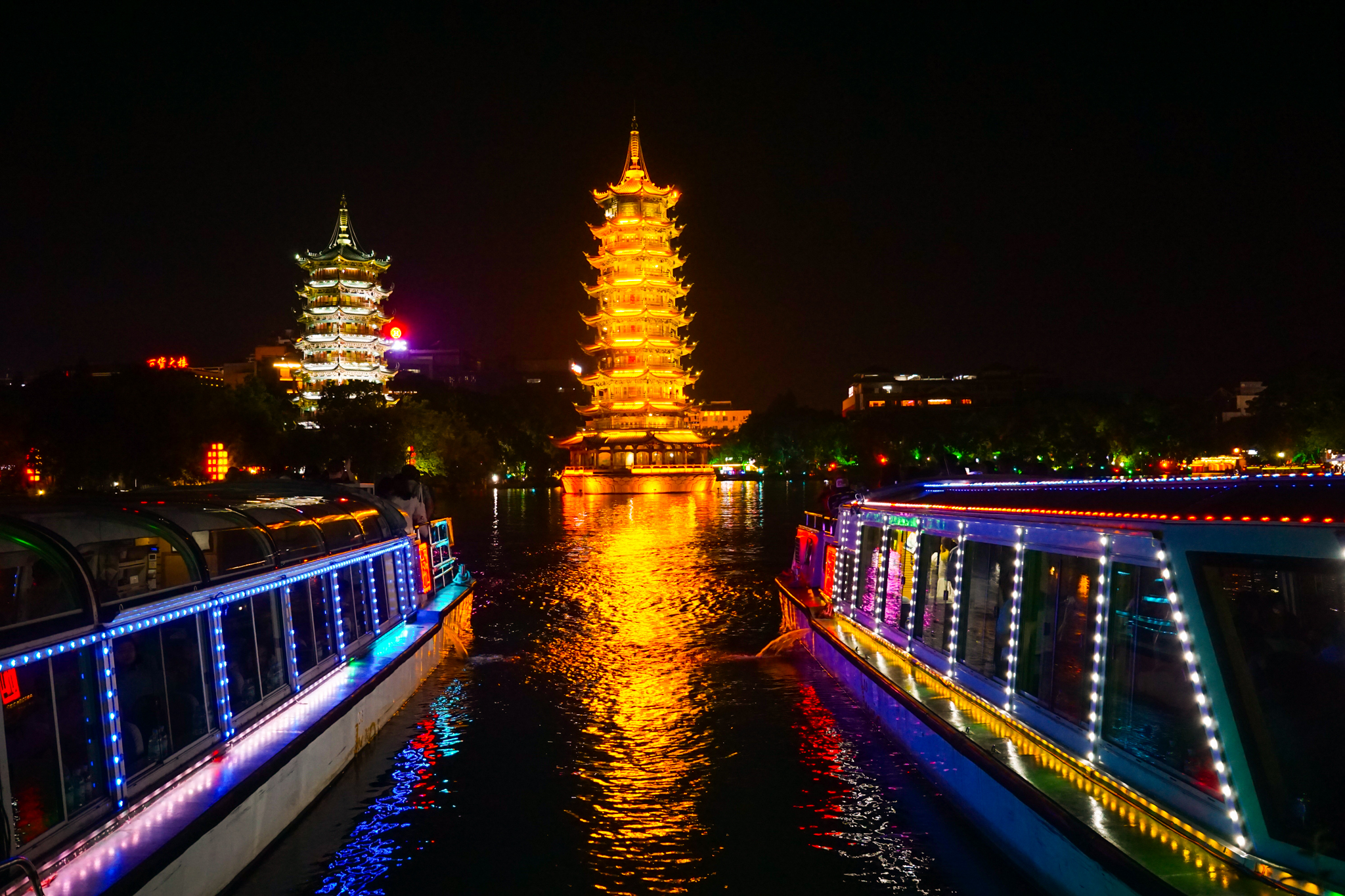
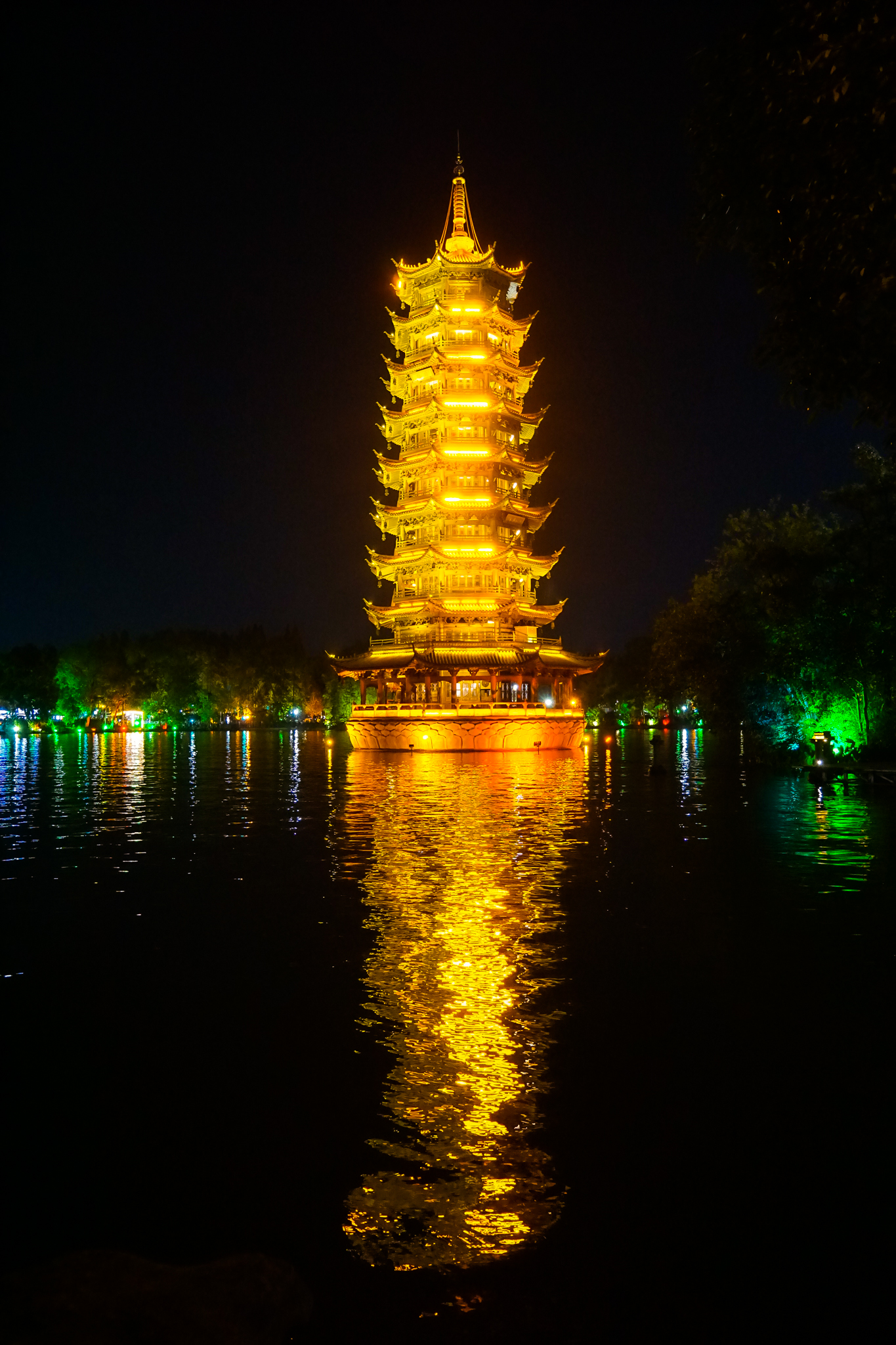
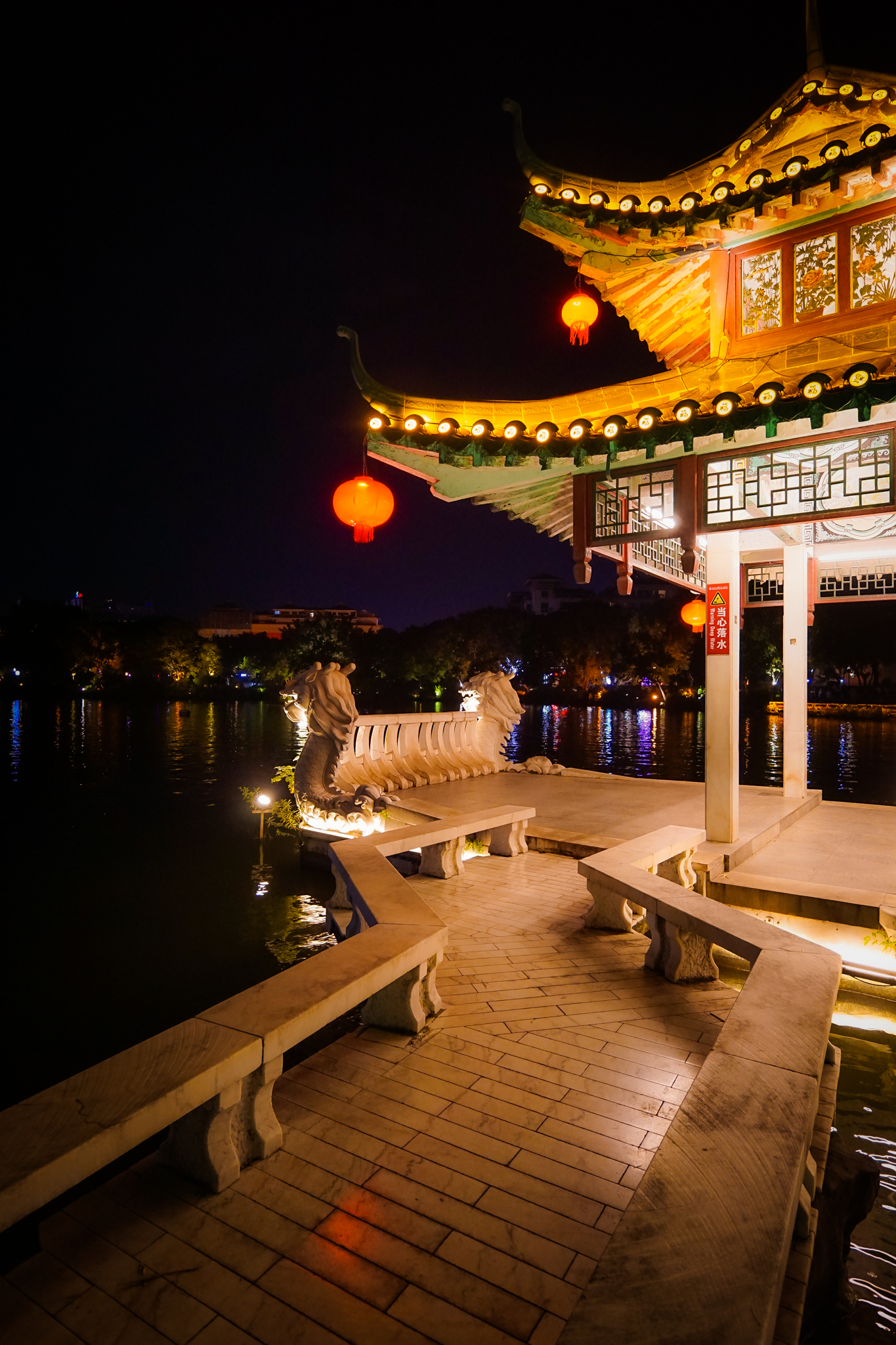
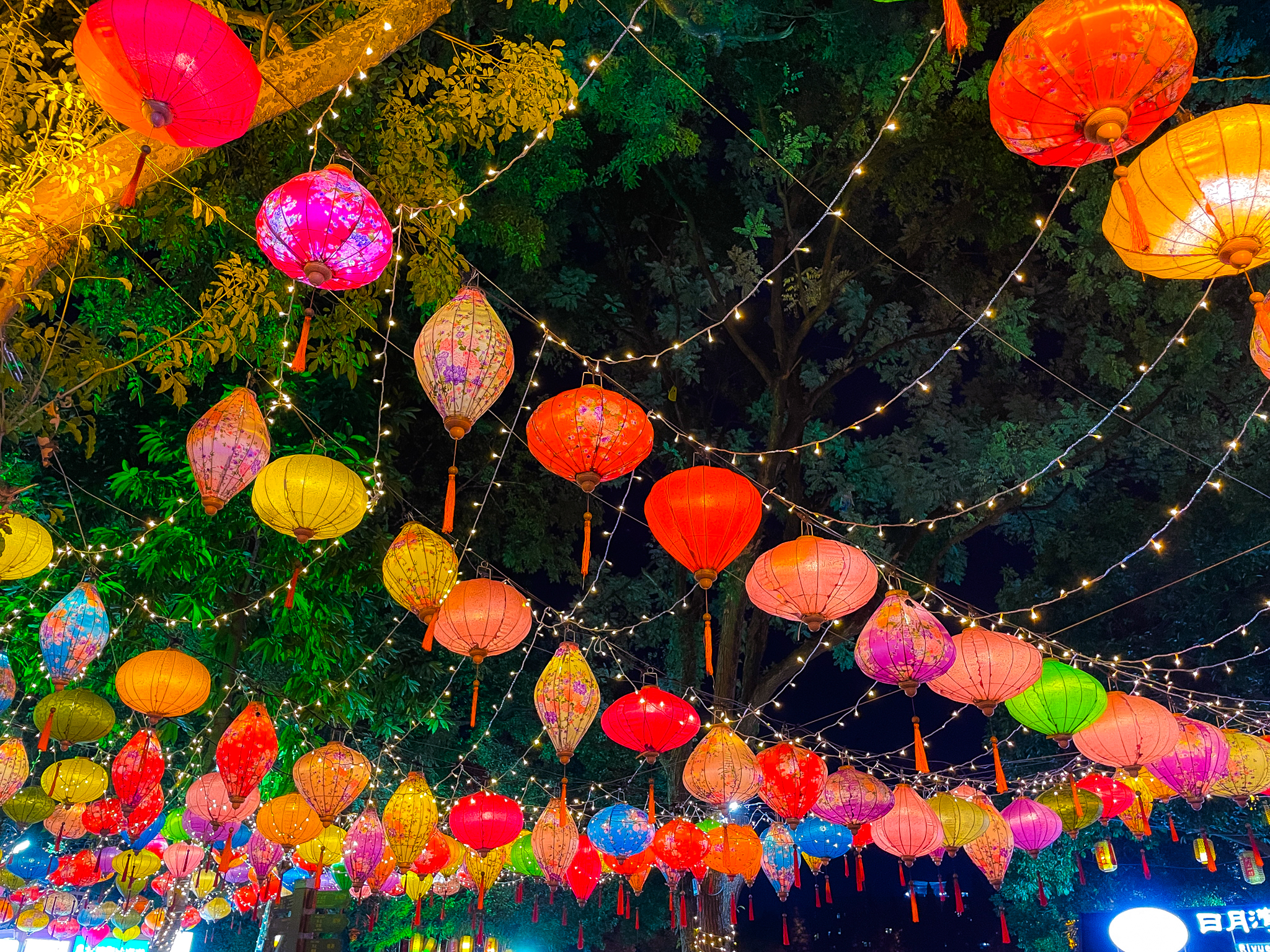
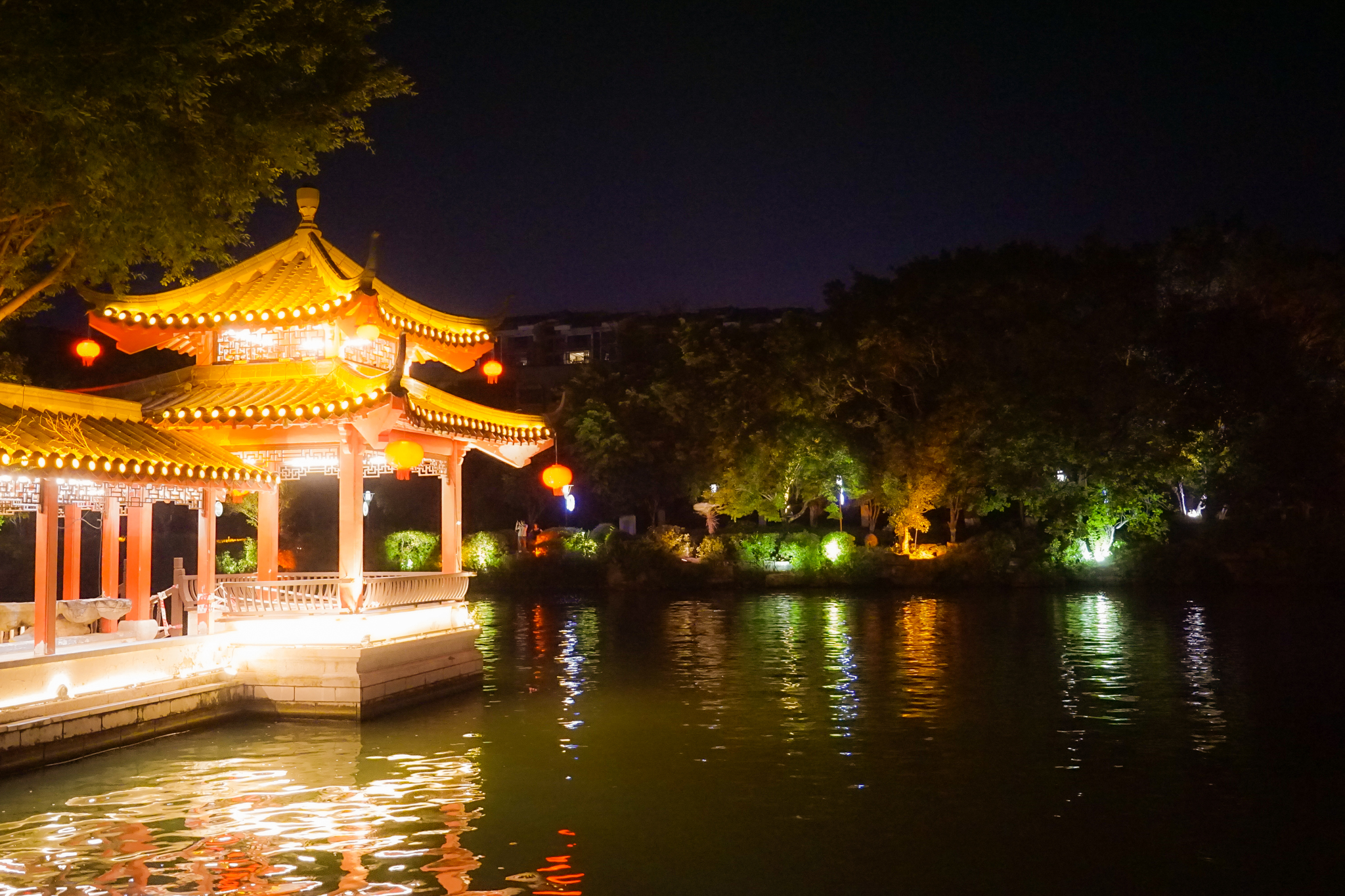
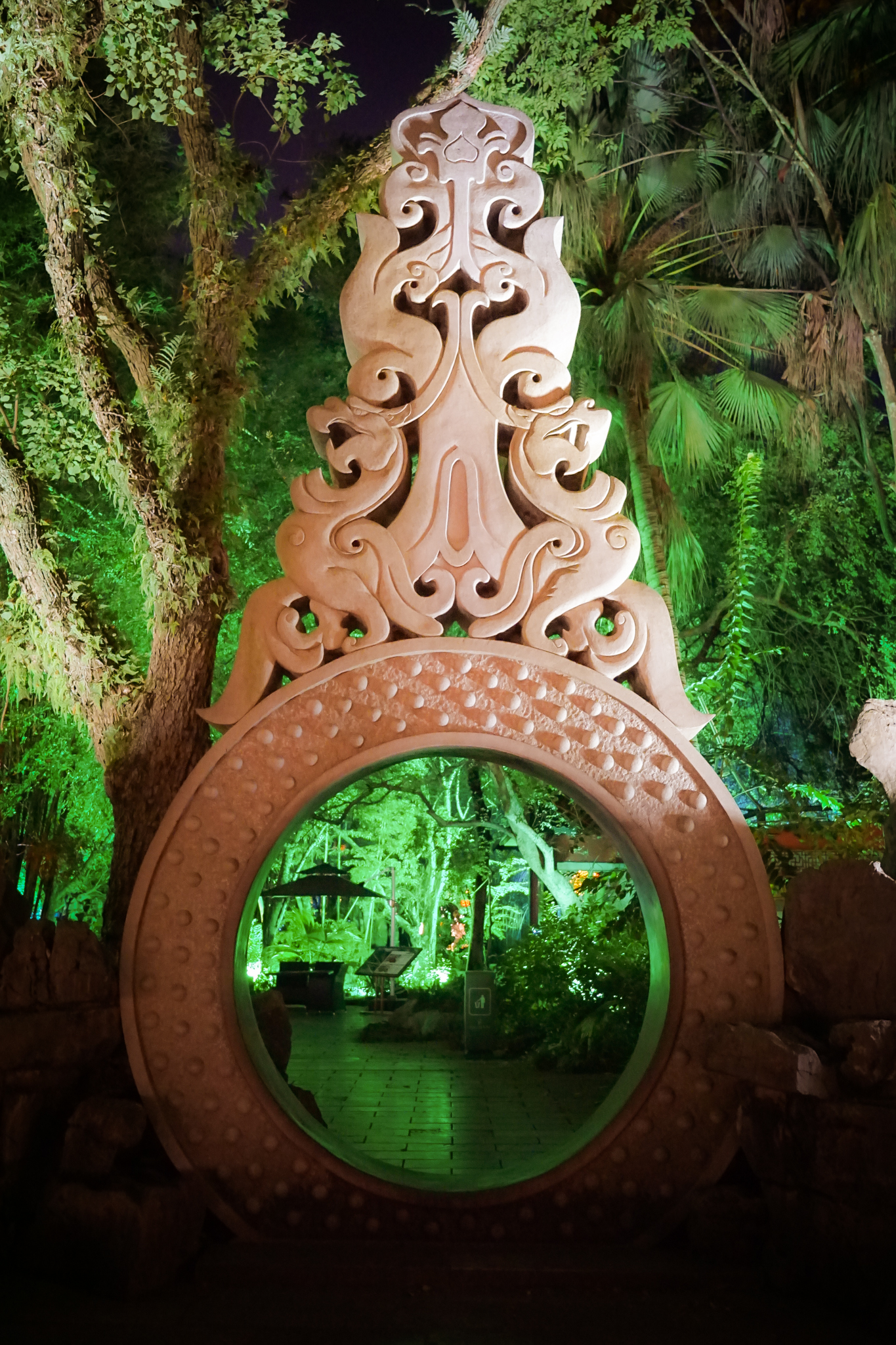
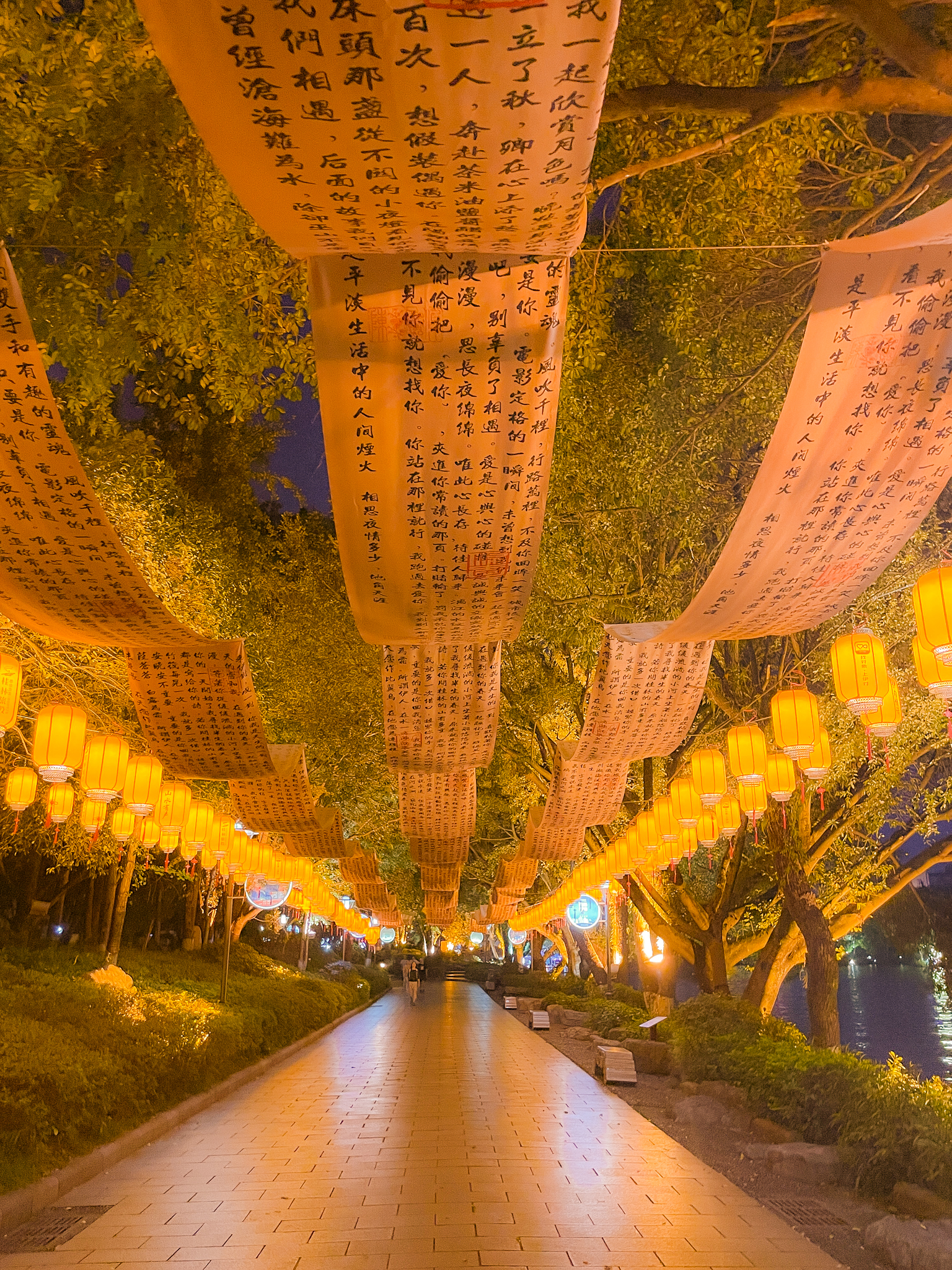
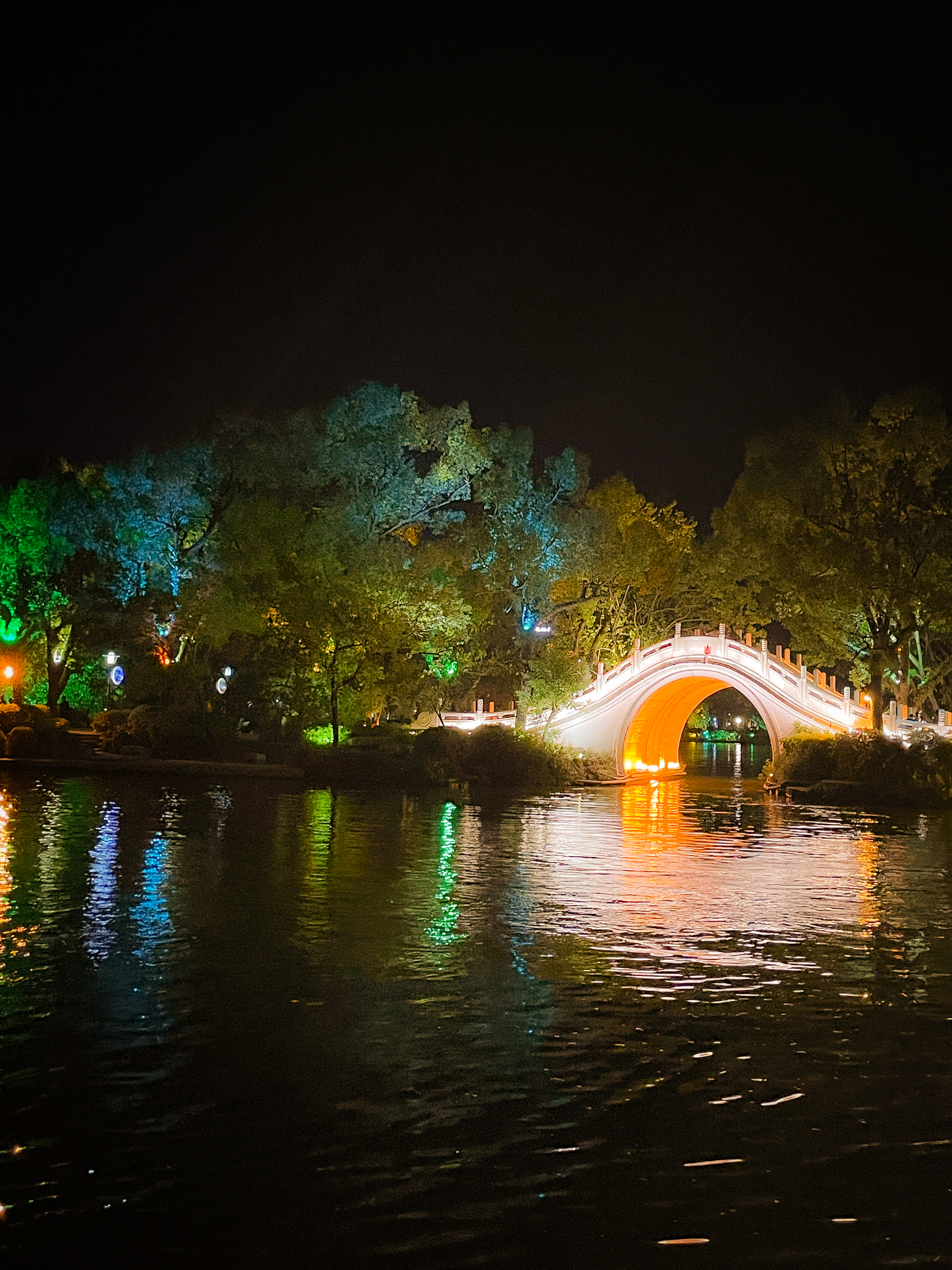
Notwithstanding their appearance, Guilin’s twin Sun and Moon Pagodas are not historical constructs. Although first built during the Tang Dynasty, what you see today are in fact reconstructed edifices constructed in 2001. Situated at the confluence of several rivers, they are particularly stunning in the evening, majestically rising up as twin gleaming gold and silver pillars. Many tourists will limit their wanderings to around the lake shoreline that abuts to the Elephant Trunk Hill scenic area (象鼻山), and some may even take a short cruise, but by failing to circumnavigate the entire lake shoreline by foot, they are missing out on the heart of Guilin. During the twilight hours, elderly locals pontificate their next weiqi move on stone tables, while others partake in raucous karaoke singing or gentle waltzing, children race around with paper lanterns, and young couples stroll along illuminated bridges and pathways. We will always remember that golden-lit avenue lined with calligraphic scrolls – if only we were wearing hanfu that evening.
Travel Tip #4: Get off the beaten path
When visiting Guilin and Yangshuo, you must, of course, do all touristy things. You should partake in the half-day Li River (漓江) cruise sitting on one of those mass tourism boats that serve very unfortunate Westernized Chinese food, even if in our opinion, the Yangtze River cruise by comparison showcases more stunning scenery. You should stroll or bicycle along the Ten Mile Gallery (十里画廊), and you should also go bamboo rafting, whether in slow form or on one of the smaller rafts that will get your feet wet. But we highly recommend getting off the beaten path also and visit the remnants of ancient towns and ancient bridges around Guilin and Yangshuo, and also attend performances that evoke the history of both areas.
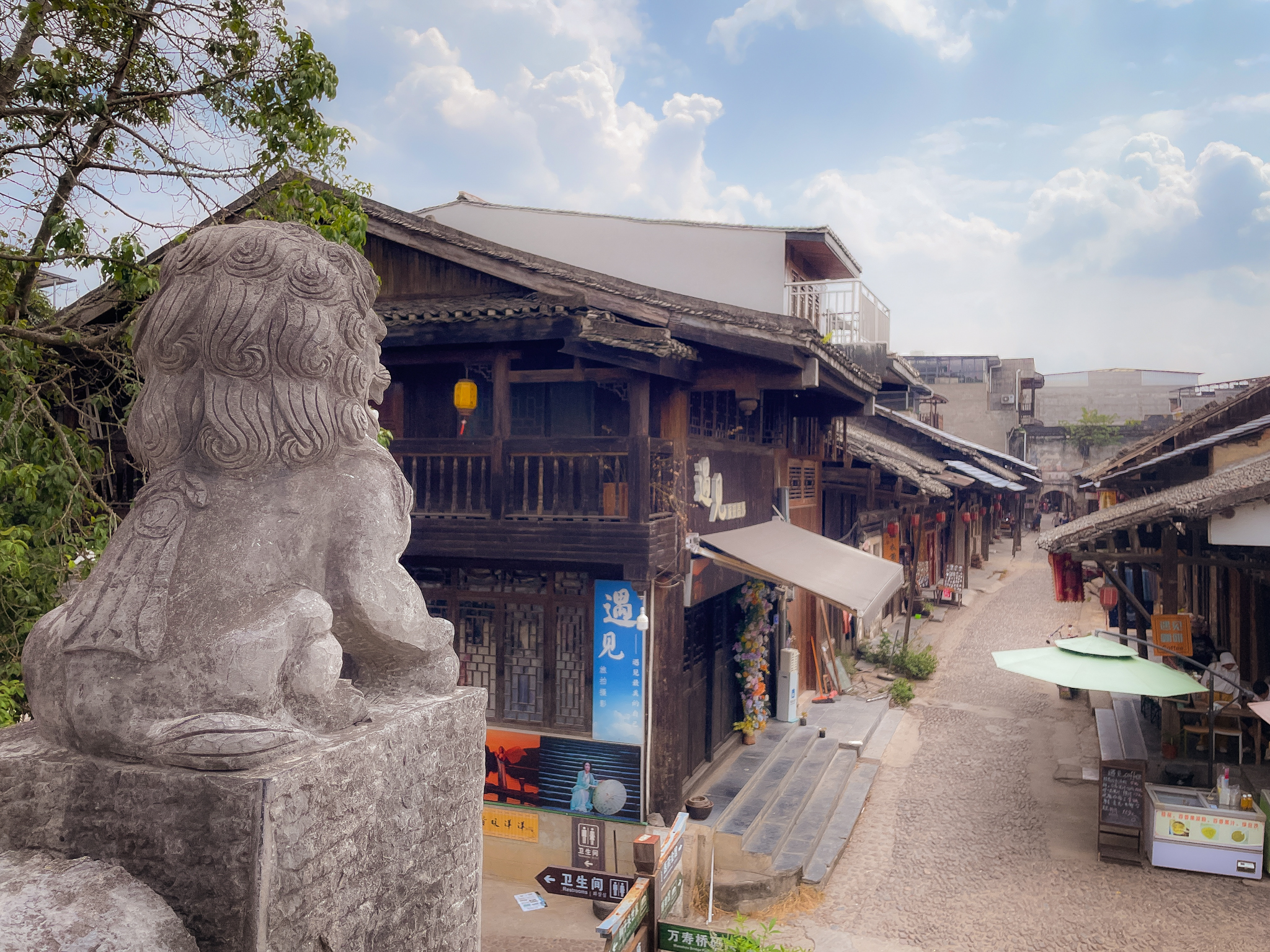
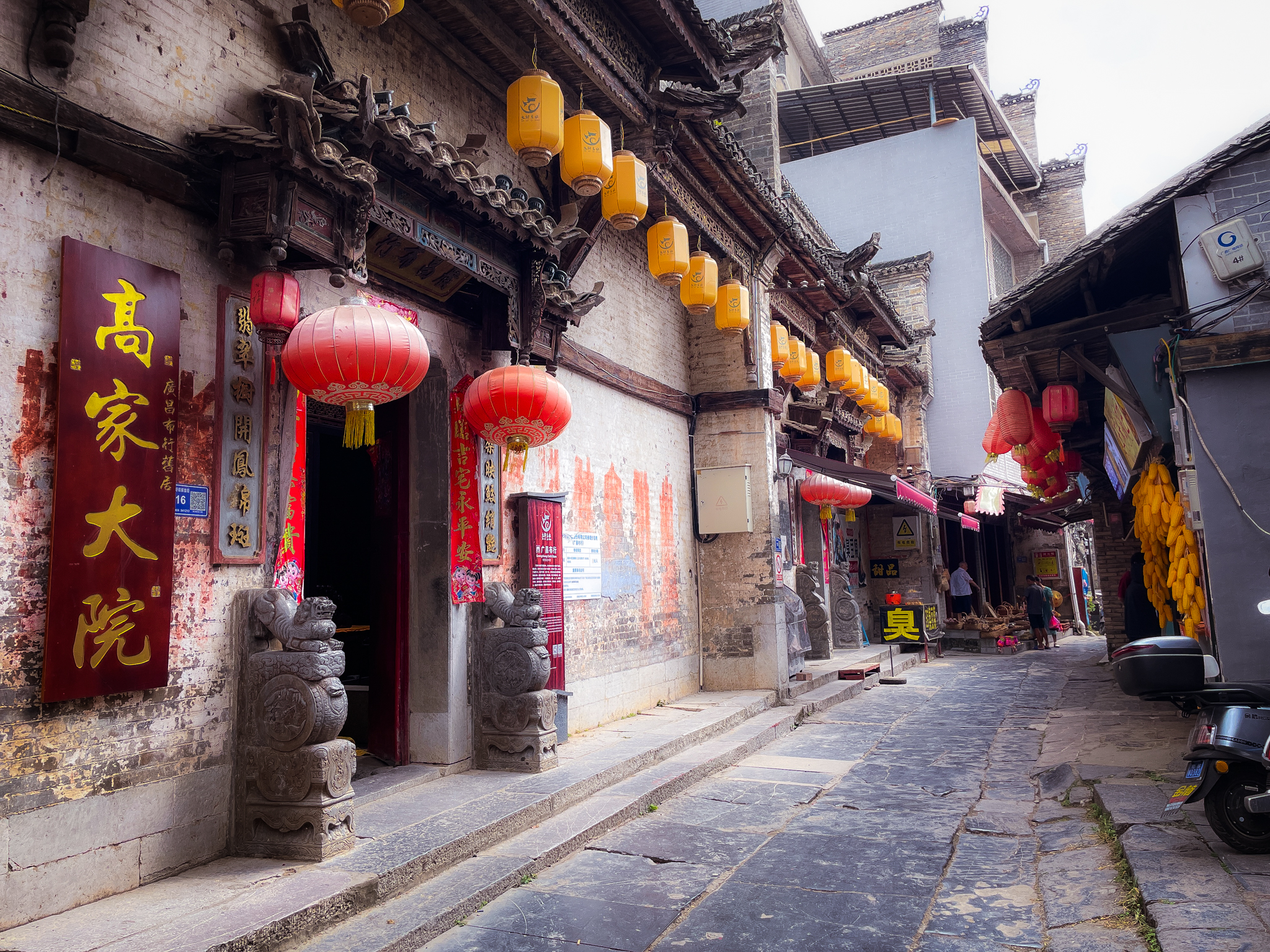
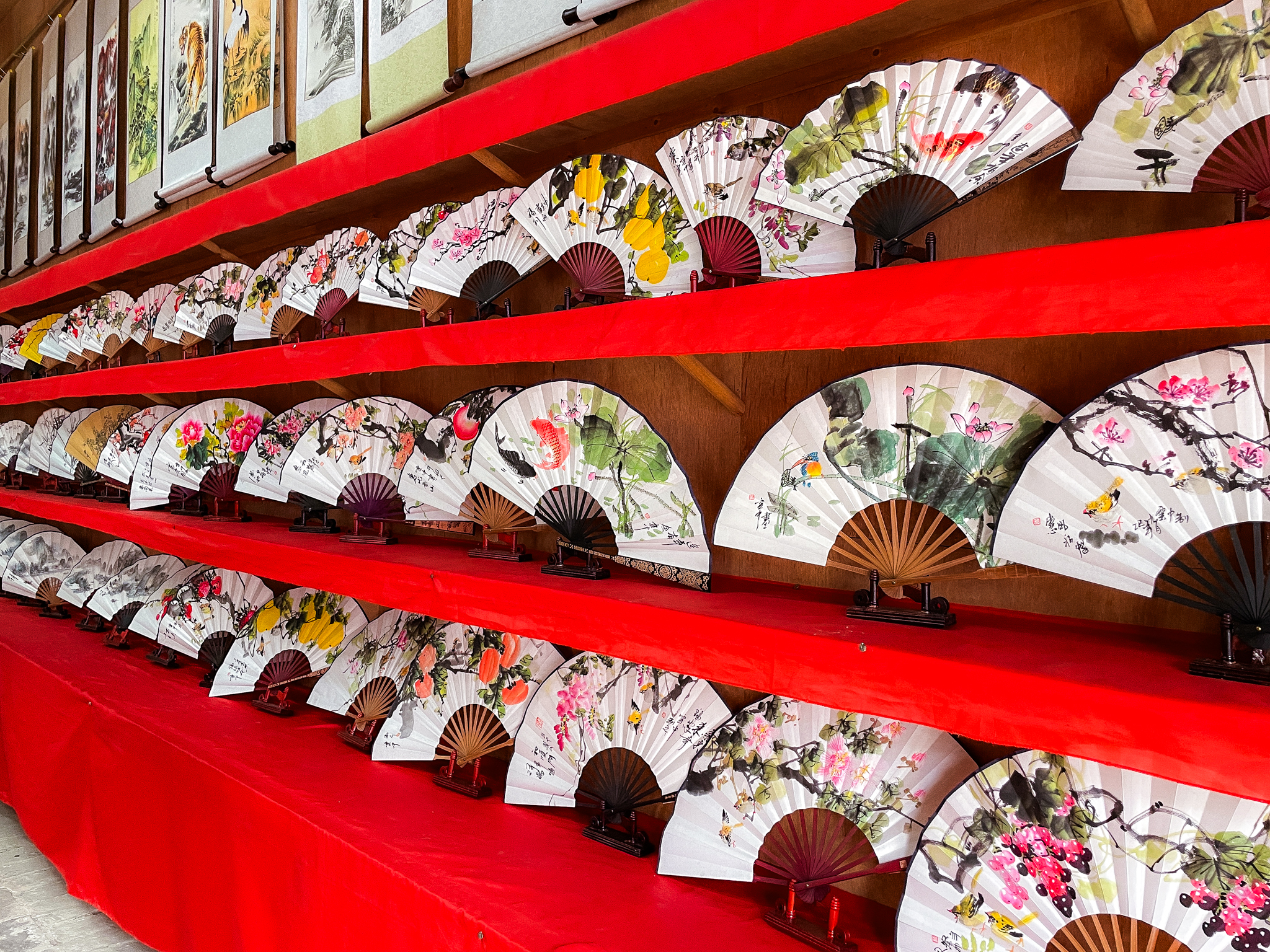
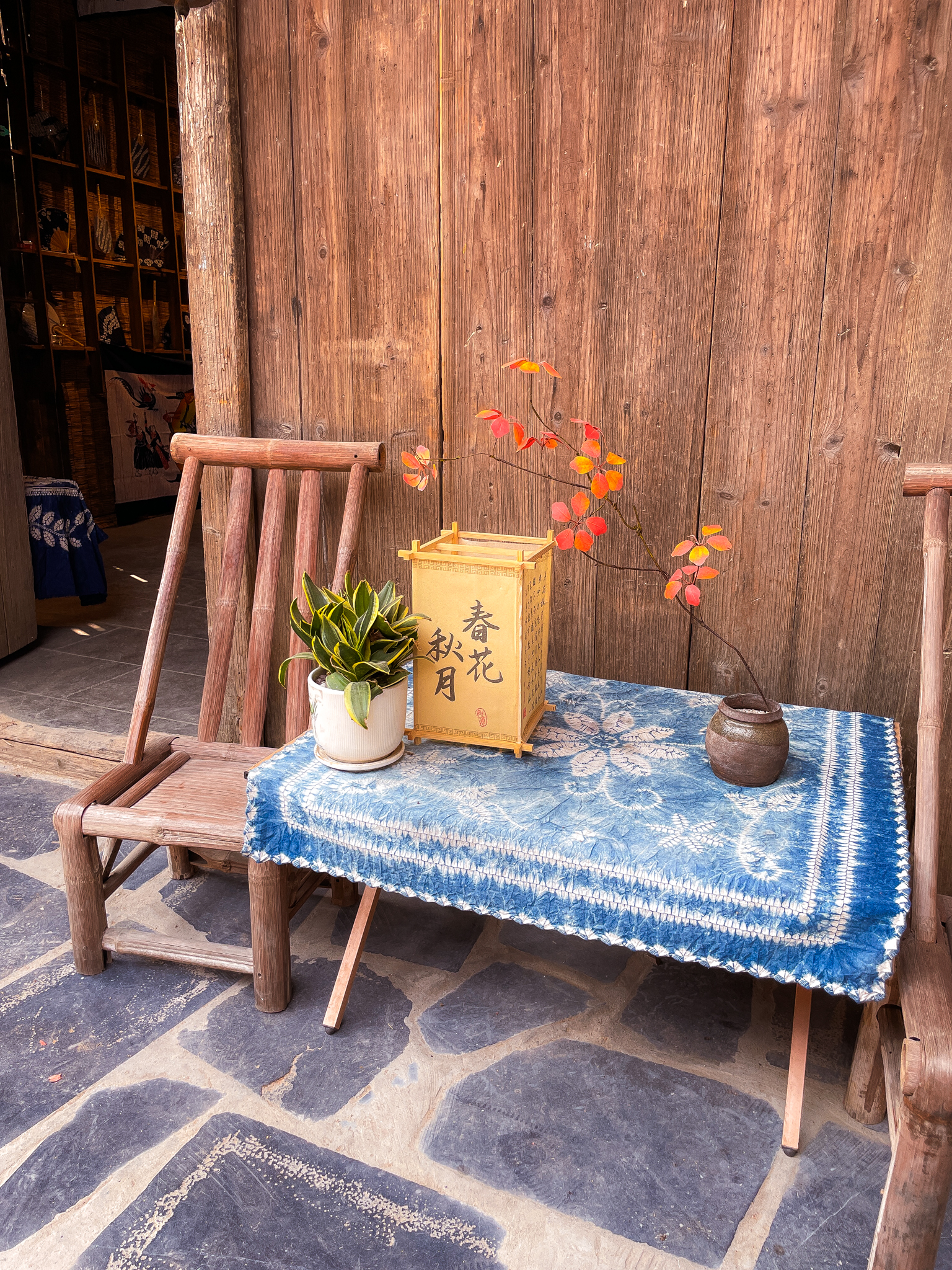
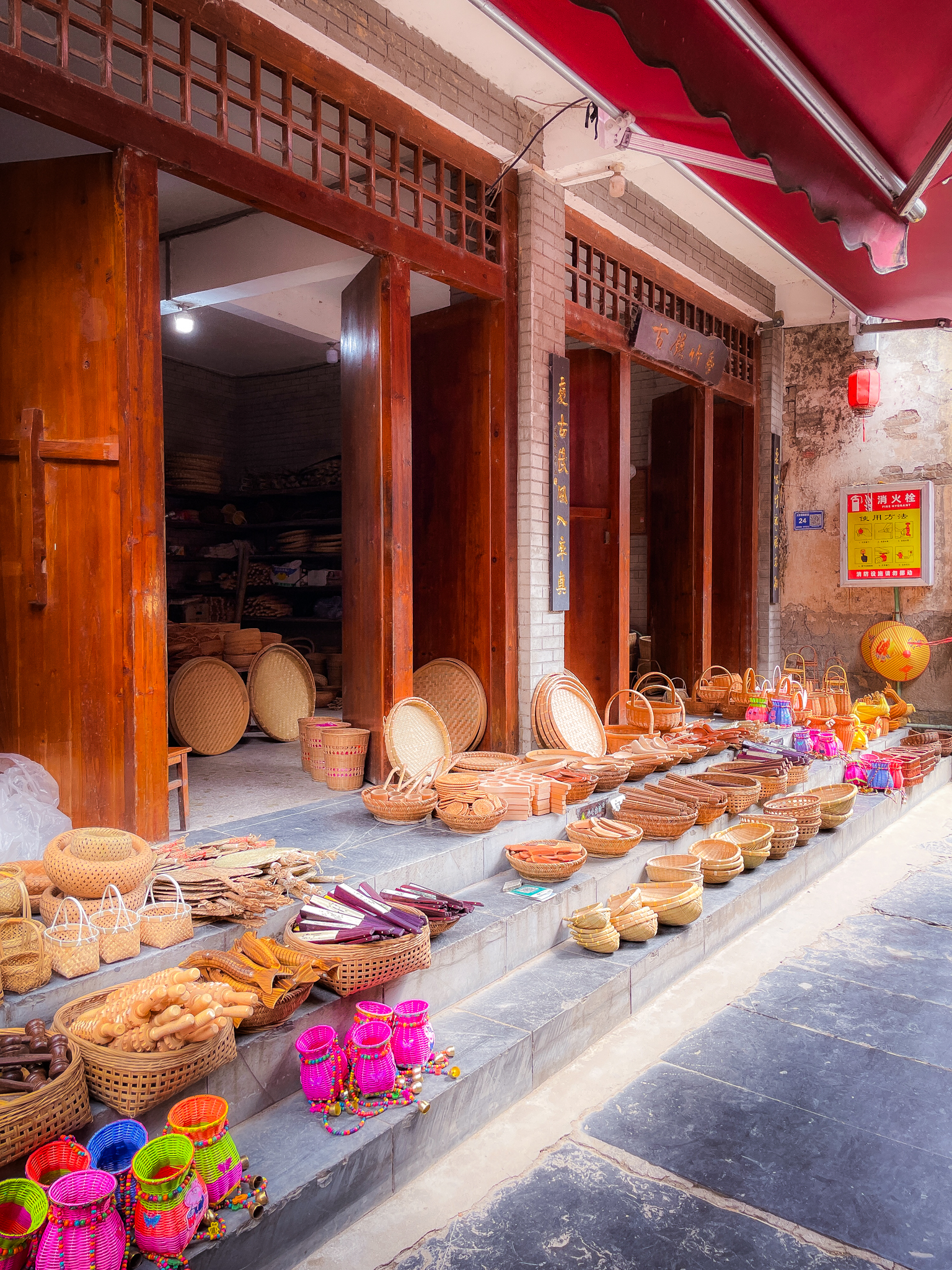
- Ancient towns – During our trip, we visited Daxu Village (大圩) near Guilin and Fuli Village (福利古镇) near Yangshuo. Although Daxu is the older of the two, both saw peak prosperity in or around the Ming Dynasty. While both see very few tourists today (we didn’t seen any on our visit), they are nonetheless interesting to imagine what life might have been several hundred years ago. Fuli in particular, is famous for its painted fan production, and you can still buy such painted fan and scrolls direct from the elderly local artisans.
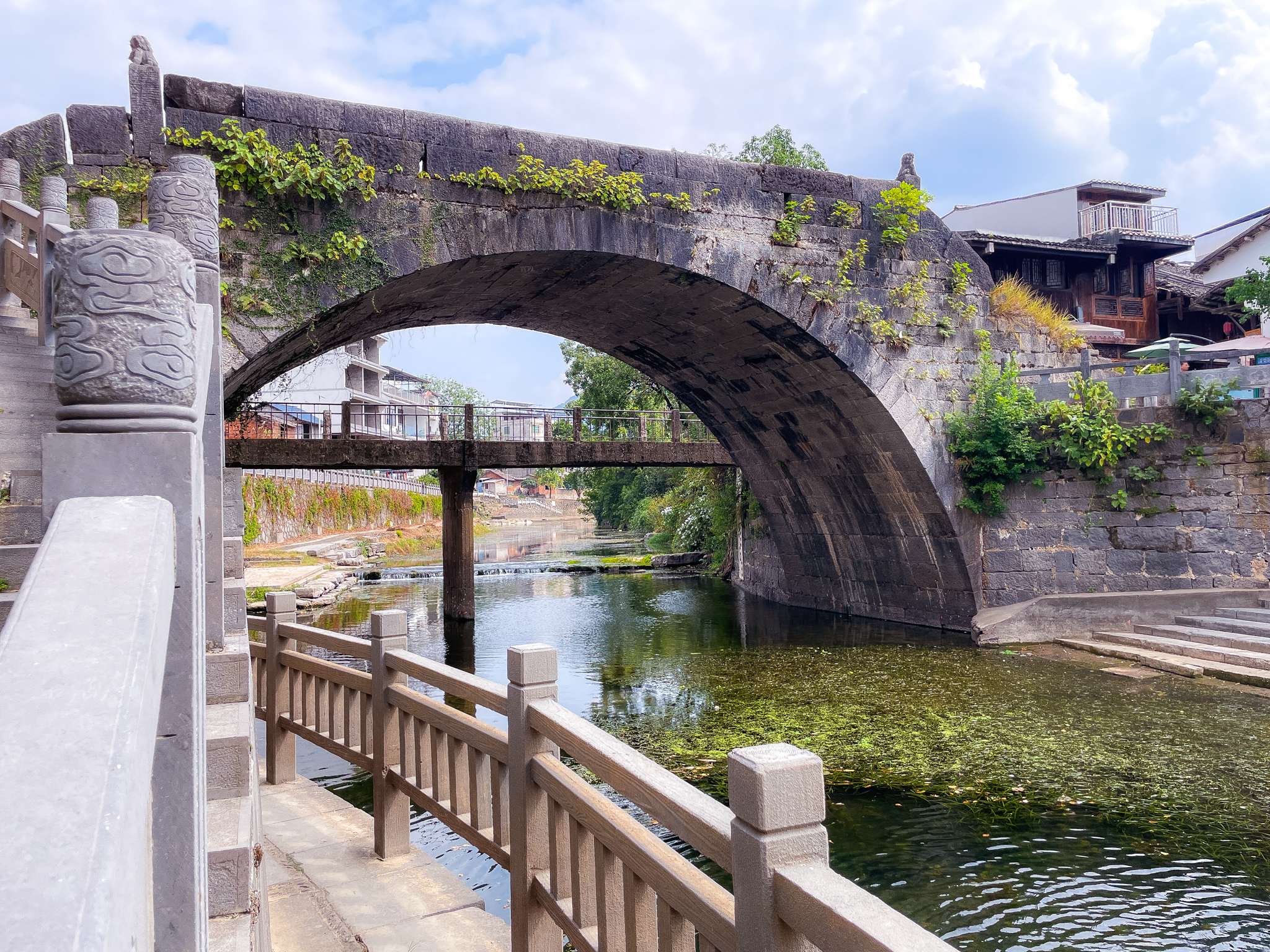
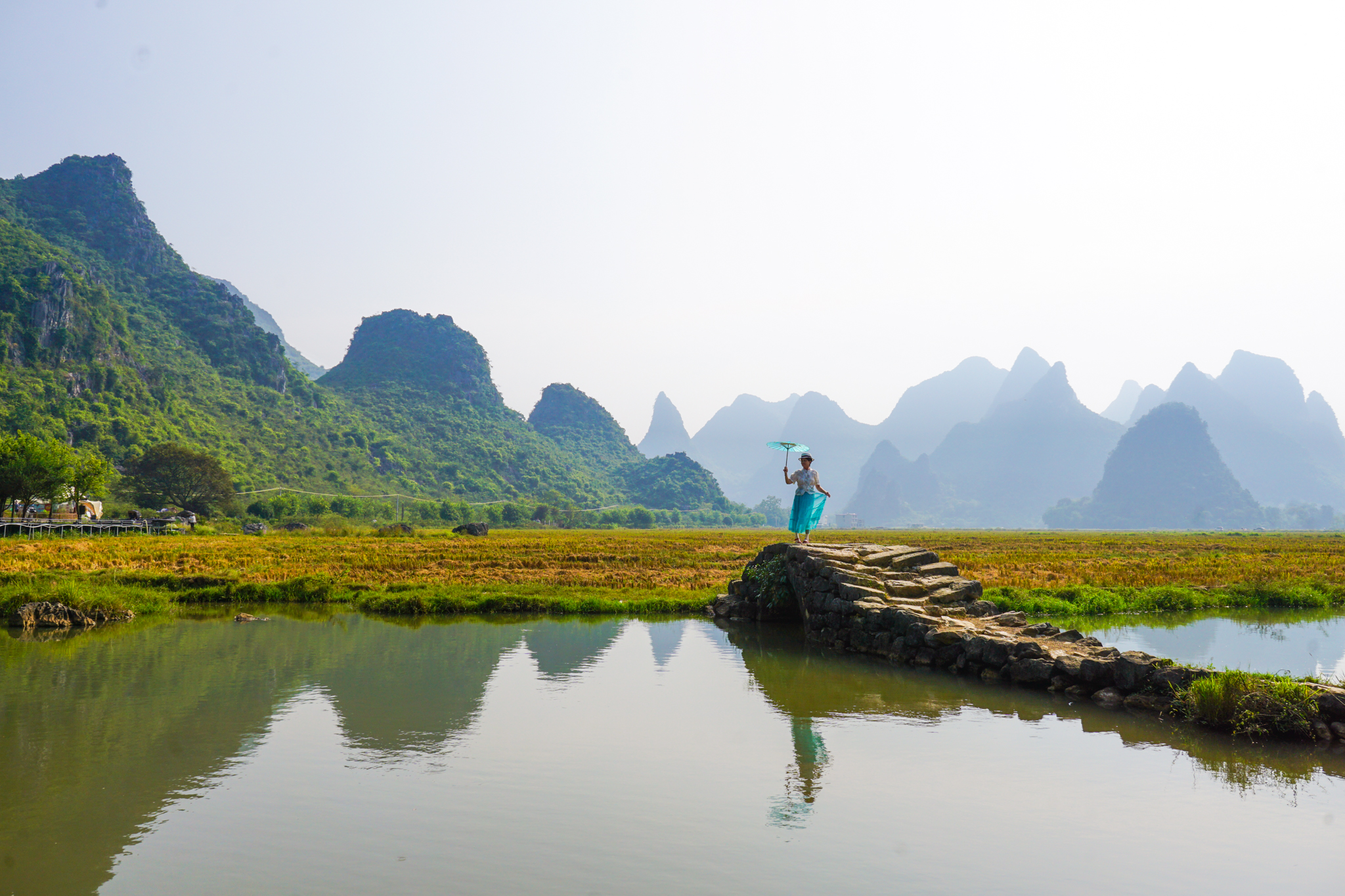
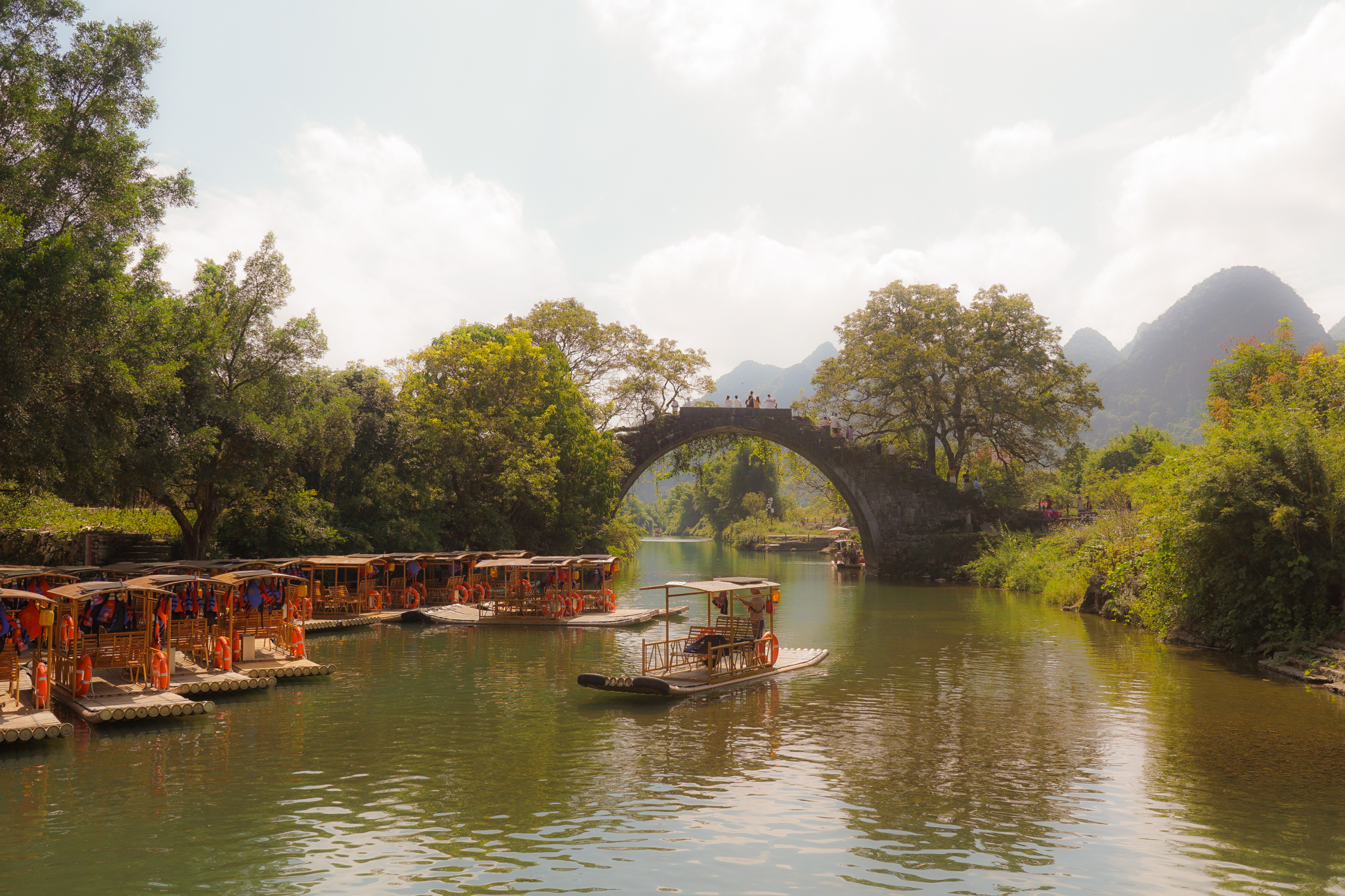
- Ancient bridges – Constructed during the Ming Dynasty, Fuli Bridge (富里桥) on the Yulong River in Yangshuo is a Chinese painting in real life, its perfect half-moon circle reflecting into the shimmering waters, and bookended by trees. By contrast, in a more bucolic setting, Zhengyuan Bridge (状元桥) almost an hour outside of Guilin is a tribute to a local family that produced several renowed Hanlin Academy scholars.
- Live performances:
- Impression Sanjie Liu show (印象刘三姐) – Designed by the celebrated movie director, Zhang Yimou, this evening show in Yangshuo incorporates elements of the mass synchronization that distinguish the opening ceremony of the Beijing Olympics as still today, one of the most breathtaking spectacles ever curated. Performed entirely outdoors (plastic rain jackets are provided for rainy days), and against a karst mountain backdrop illuminated by spotlights, it showcases the ethnic history and culture of the surrounding area. We admittedly don’t exactly understand much of the actual storyline, but we have also never seen anything like it.
- Romance Park show (千古情) – The Songcheng Group (宋城集团) produces theatrical shows across China, and there is one in Yangshuo. It was not even on our touring list, and we only made a last minute booking due to rain that day. Exceeding our wildest expectations, it combines traditional Chinese dances, aerial gymnastics, Broadway-like story-telling musicals, and special effects sequences into a 360-degrees multi-sensory exhibition of history and culture. This is one experience that cannot be captured in any way by photos or words alone.
Travel Tip #5: Climb Ruyi Peak
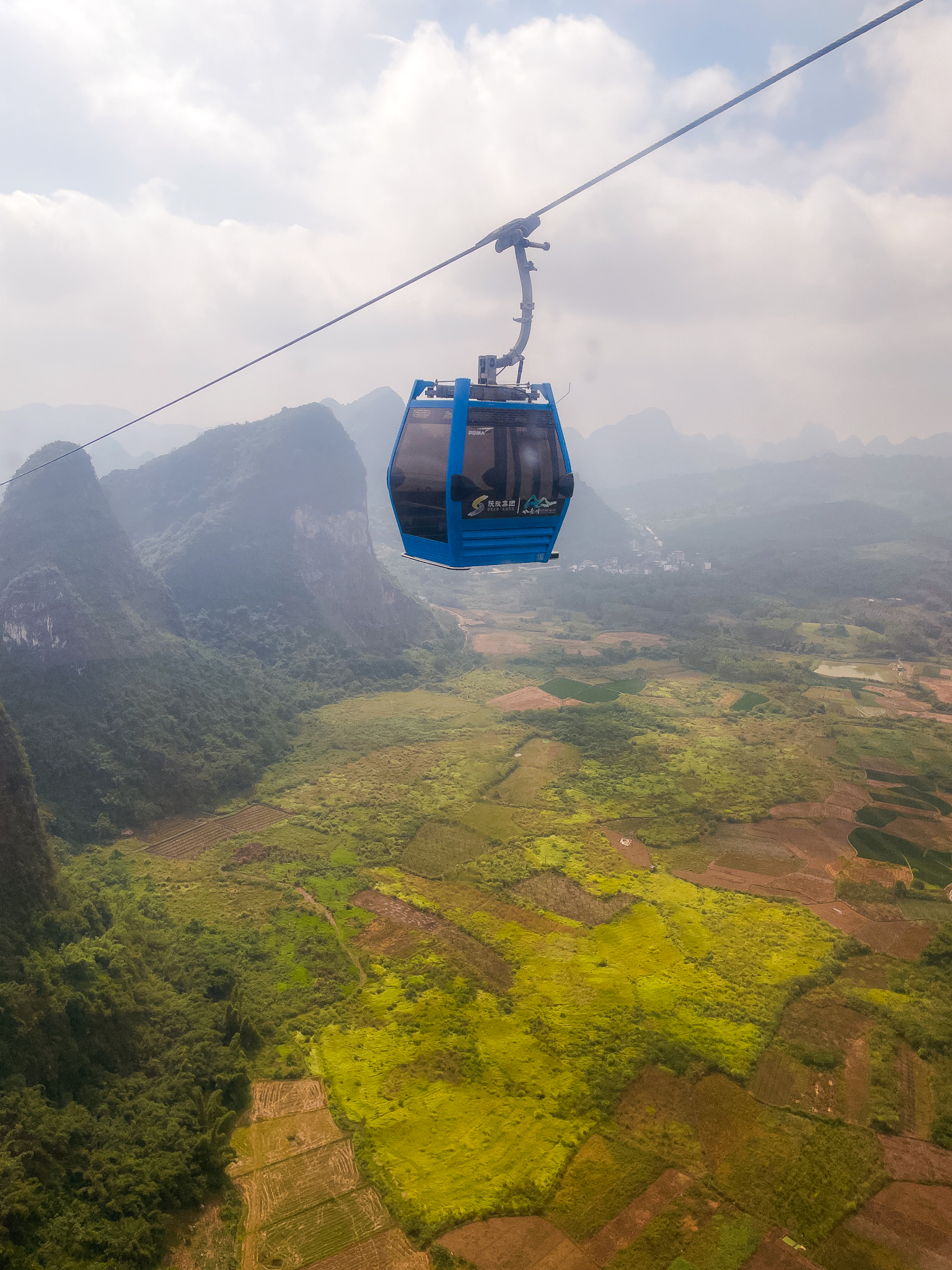
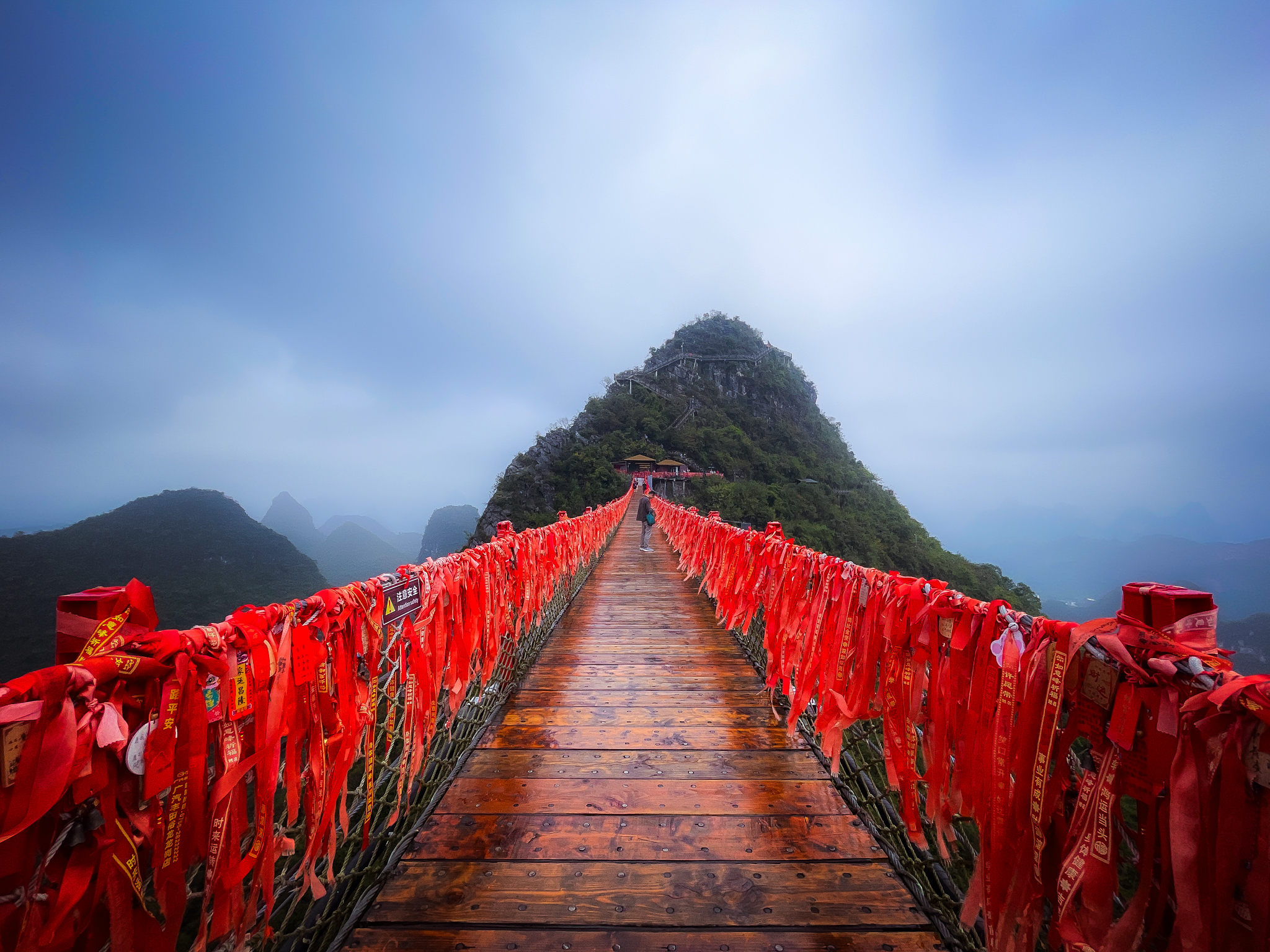
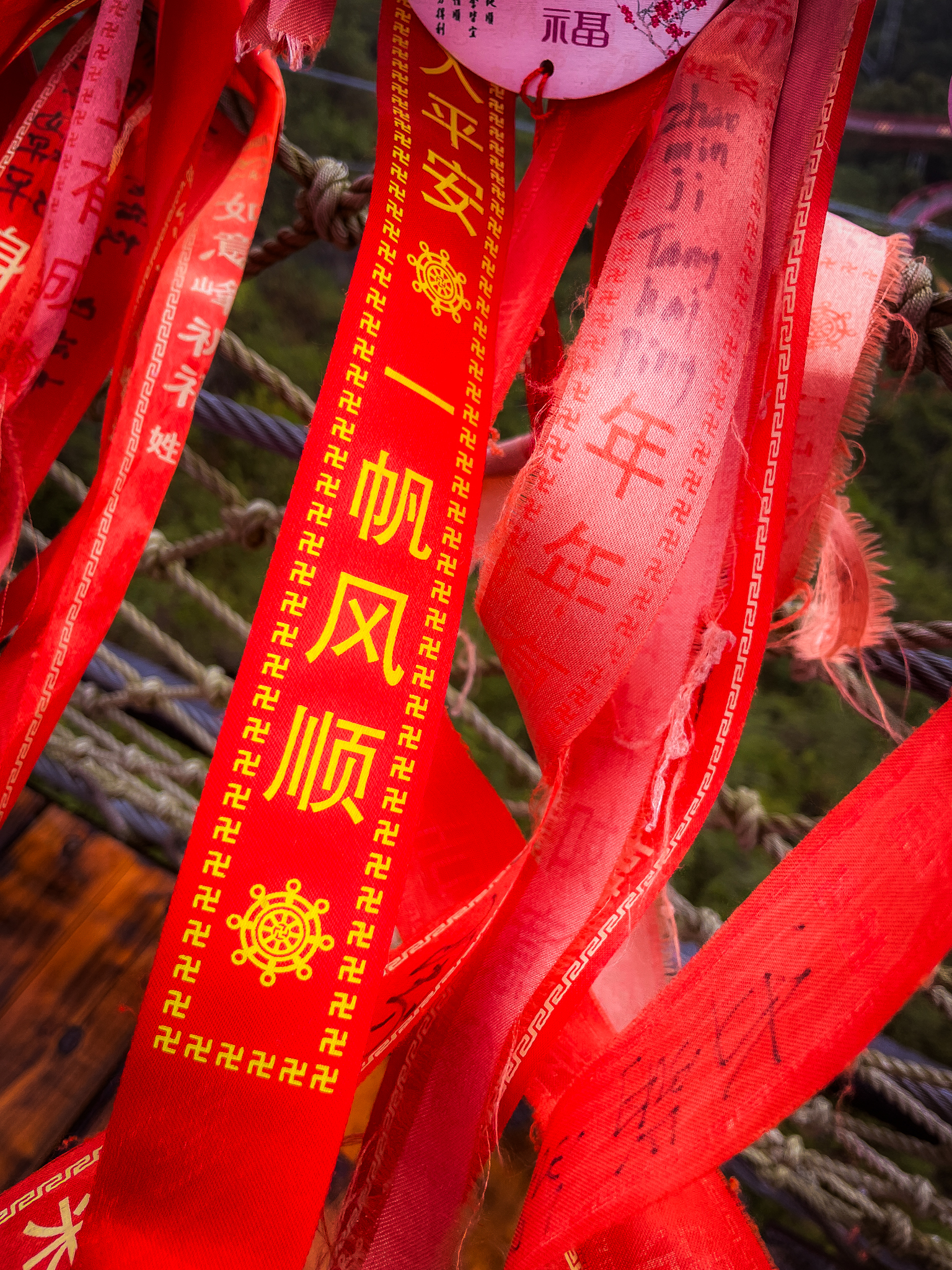
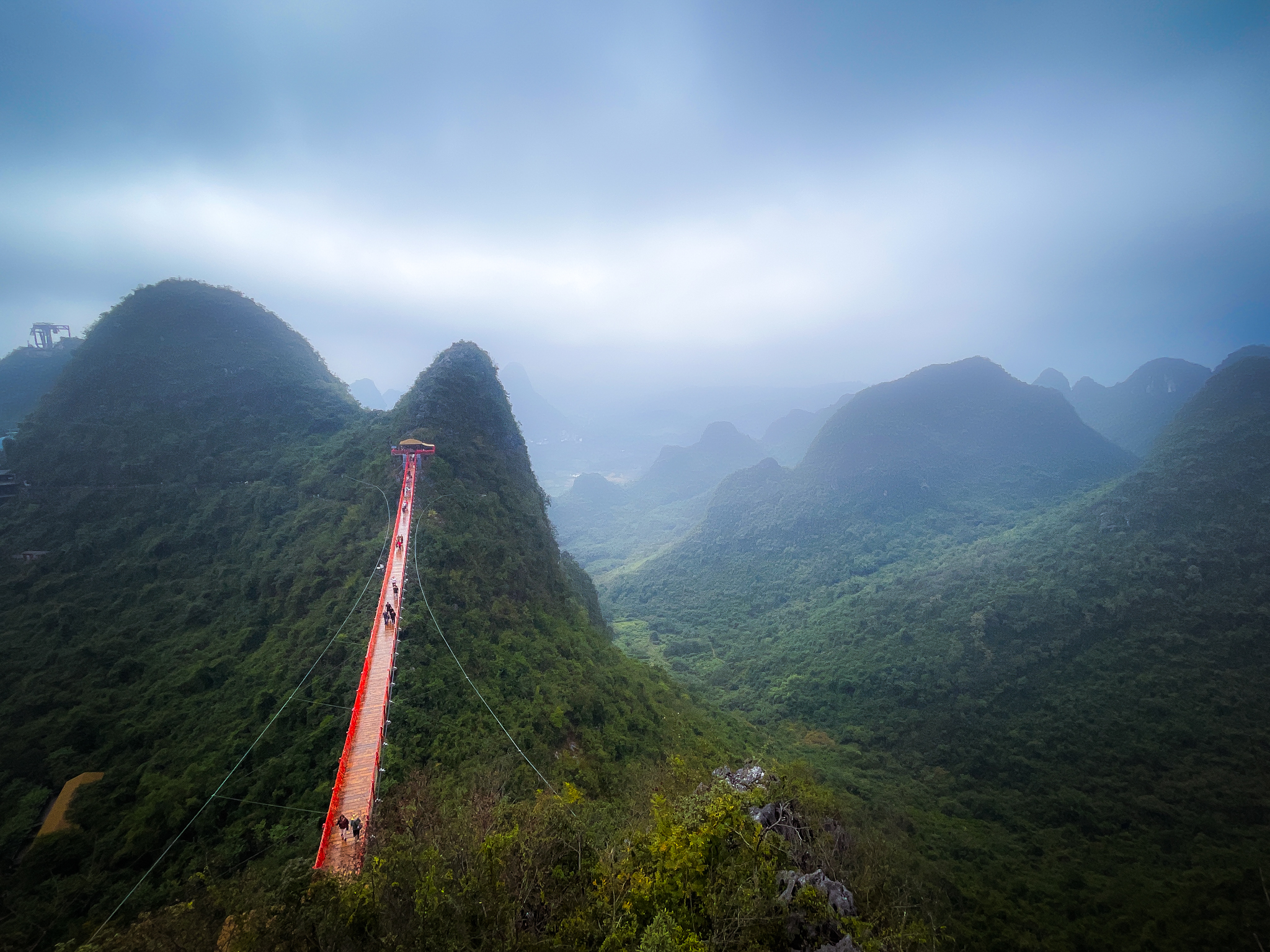
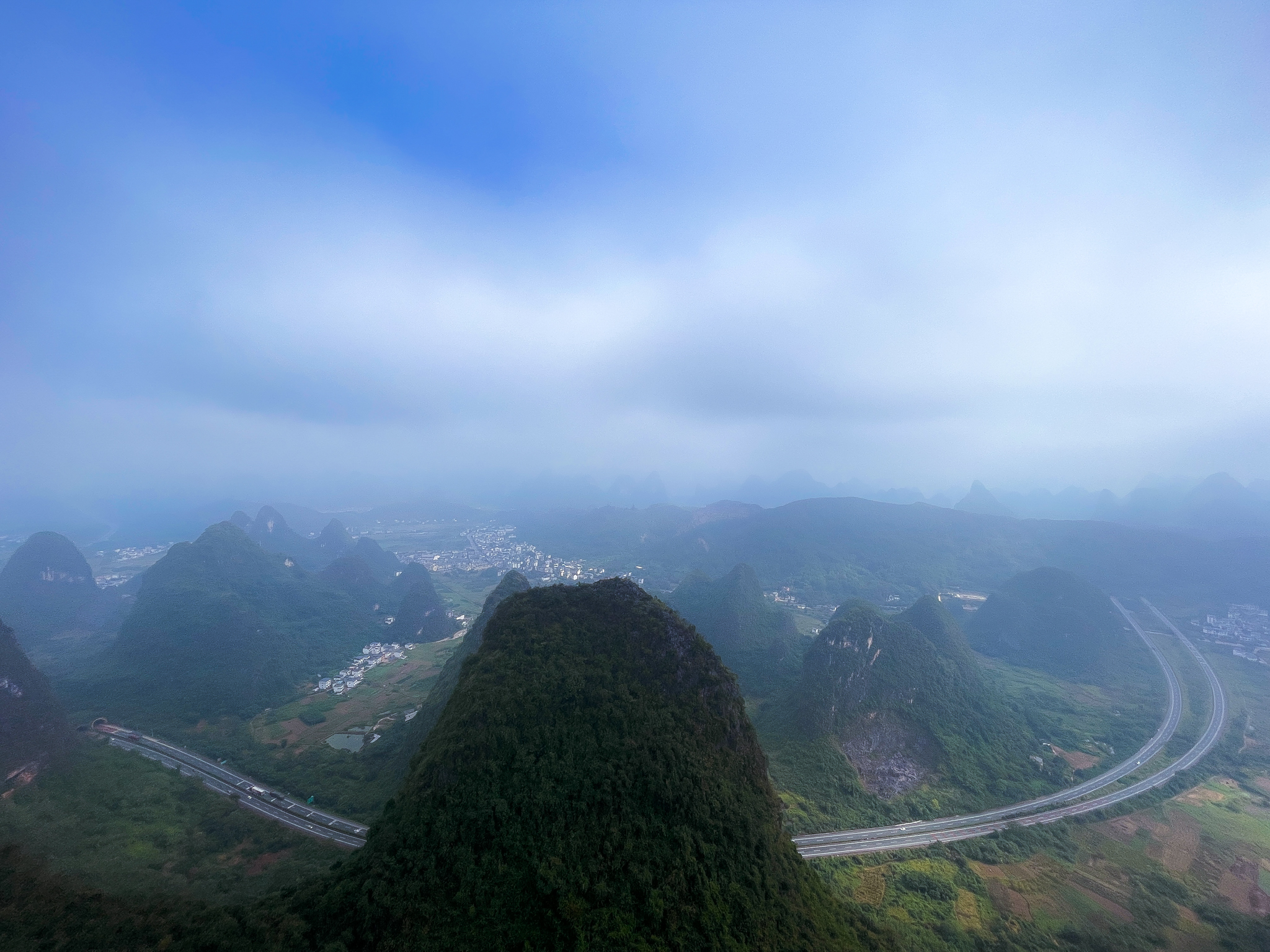
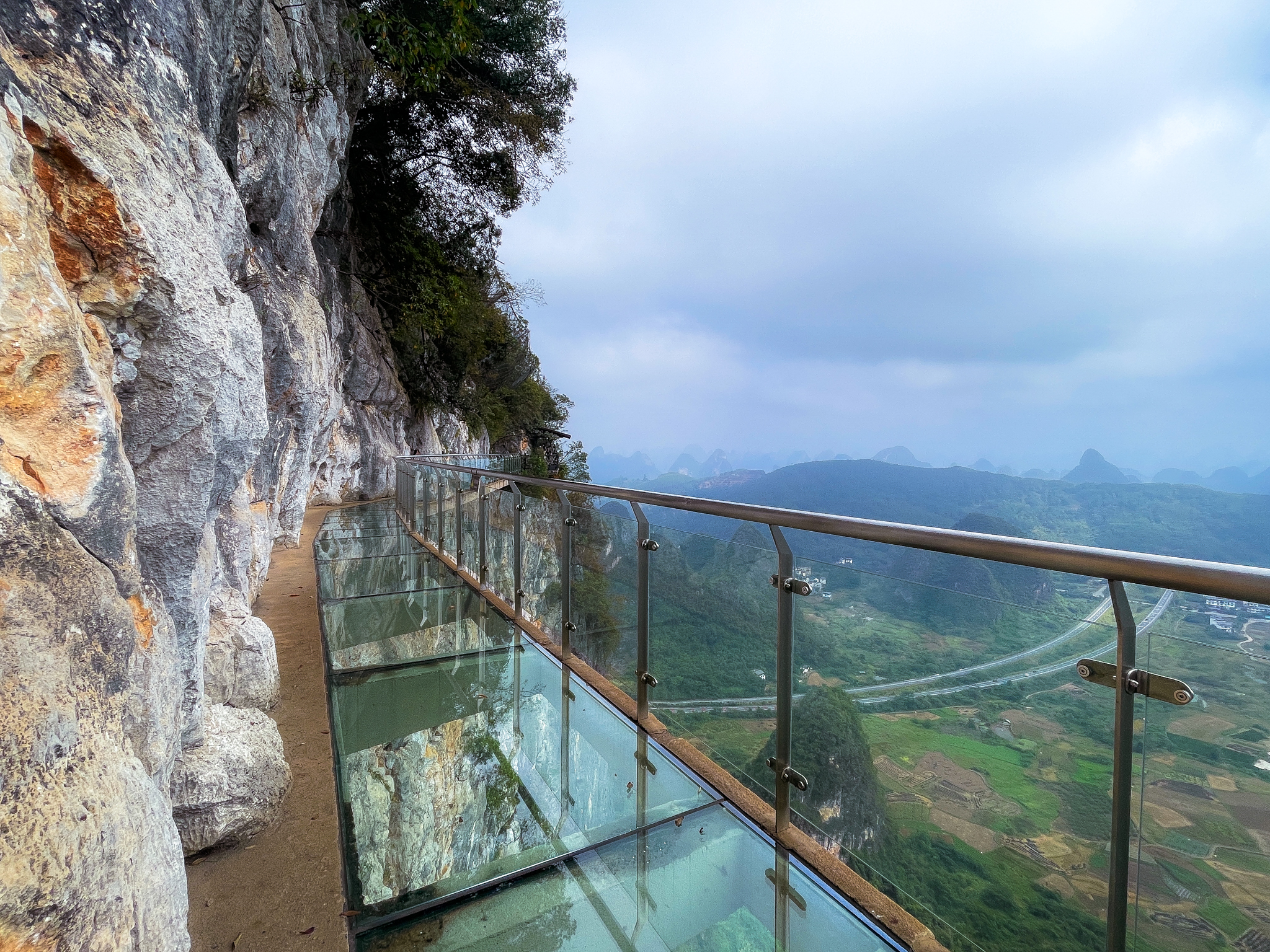
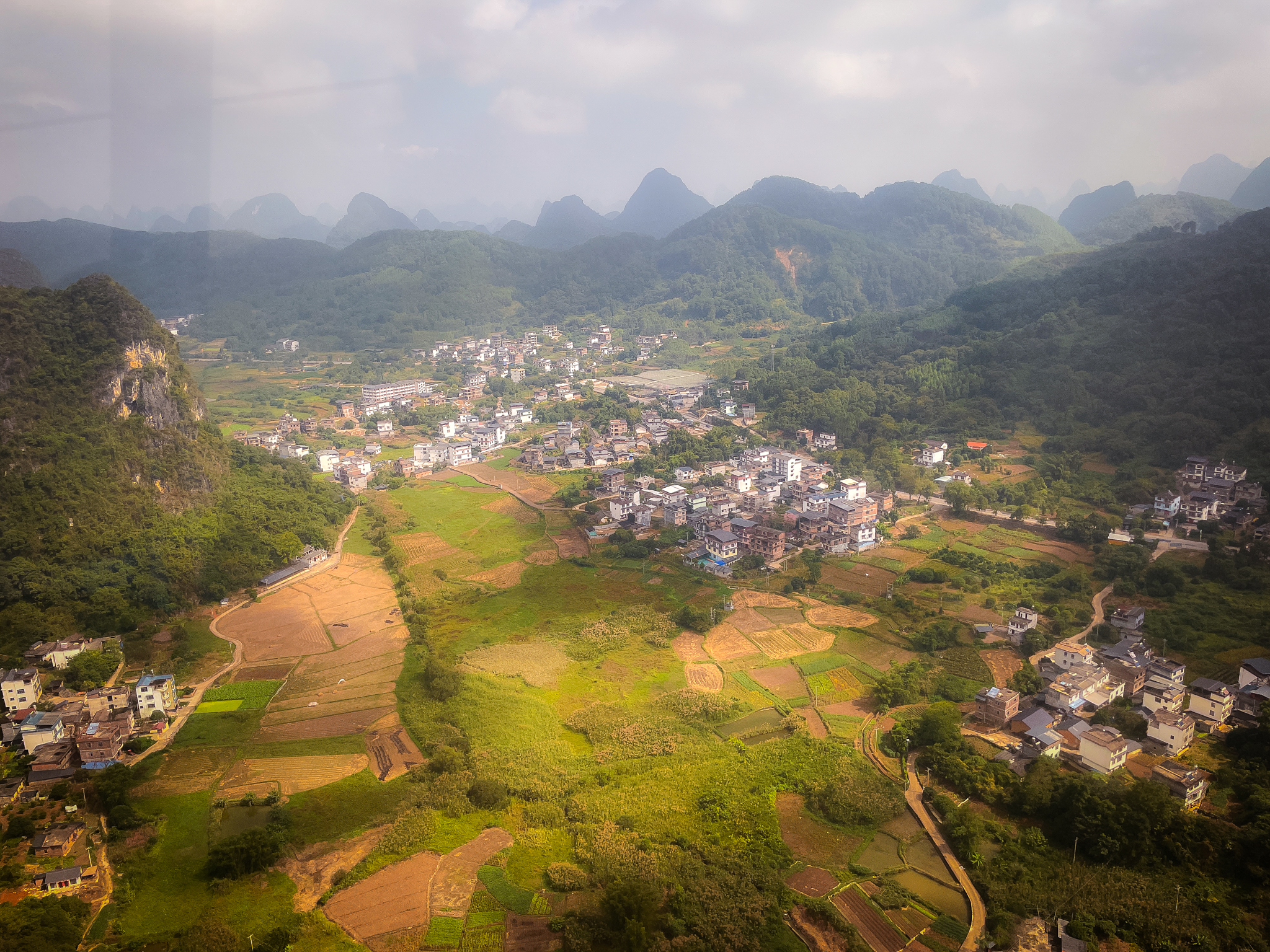
Ruyi Peak (如意峰) almost never features on the preset itineraries of tour companies, and barely any travel bloggers from the West seem to know about it either. It is not entirely “off the beaten path” though – if you scroll through Xiaohongshu, it is clearly very well-known among Chinese netizens. If you want to see Yangshuo from a mountain top, but if you cannot afford staying at the above-mentioned Misty Wonderland, you should not miss Ruyi Peak. Set up almost like an adventure park, it starts with a vertiginous cable car ride through the clouds, followed by a short hike through forested areas, before reaching a rather long suspension wood bridge covered in red blessing ribbons. After crossing this bridge, you will reach a circular platform large enough for a helicopter to land. It sees many locals playing with their drones, while others swirl around to photograph the 360-degrees viewpoint. As you descend the mountain top, there’s two stretches of glass bridges — not as extensive as in Sanya — but still sweat-inducing if you have a fear of heights. One curves as a red bridge, and the other is carved into a limestone cliff. After this, there is a steep uphill stone stair hike that brings you back to the starting area. The full circuit will take about 2 hours at a quick pace. As with many Chinese “adventure parks,” the hiking paths are clearly designated, there is absolutely no bushwhacking. It is therefore family-friendly, accessible to energetic children and elderly people who are not mobility-challenged. We will always be in awe of the old locals who walk so effortlessly as though on air while we huff and puff like an old steam train at more than half their age.
Dessert adventure checklist
- ☑ Dessert destination: Guilin and Yangshuo, China.
- ☑ Budget: $-$$$$.
- ☑ Sweet irresistibles: Osmanthus desserts.
- ☑ Travel notes:
- How long? We recommend a minimum of 2 days in Guilin city, and depending on whether you want a jam-packed holiday or a leisurely one, an additional 2-4 days in Yangshuo.
- When to visit? October-April. This avoids the humid summer months. We visited in mid October, and it was around 30 plus degrees Celsius, which is not very comfortable sightseeing weather. Our local guide told us that each year, the summer lasts longer and longer. We might therefore recommend visiting from November onwards instead.
- How to get there? We took the high-speed rail train from Hong Kong to Guilin, which was around 3.5 hours. We highly recommend China’s high speed rail network — far safer than Europe’s inter-country systems (never been pickpocketed unlike in Europe), and more modern and smoother a ride than Japan’s Shinkansen.
- Where to stay? We describe the hotels we stayed at in the above.

